Global IoT Security Regulations & Certification Landscape: How Z-IoT Helps You Stay Compliant with Evolving Global Standards
Contents
- 11️⃣ Overview
- 22️⃣ Key IoT Security Regulations & Certifications Around the World
- 33️⃣ Industry-Specific IoT Security Regulations and Certifications: Maritime, Automotive, and Drone Sectors
- 44️⃣ Challenges Companies Face in Meeting Global IoT Security Regulations
- 55️⃣ Z-IoT: Automated Global Security Compliance Features
- 66️⃣ Conclusion
1️⃣ Overview
As IoT technology rapidly advances, global markets are now demanding that IoT products be “secure by design”—by default, not as an afterthought. Today, meeting a country’s legal security requirements and certification criteria has become a prerequisite for market entry, far beyond simply offering security features.
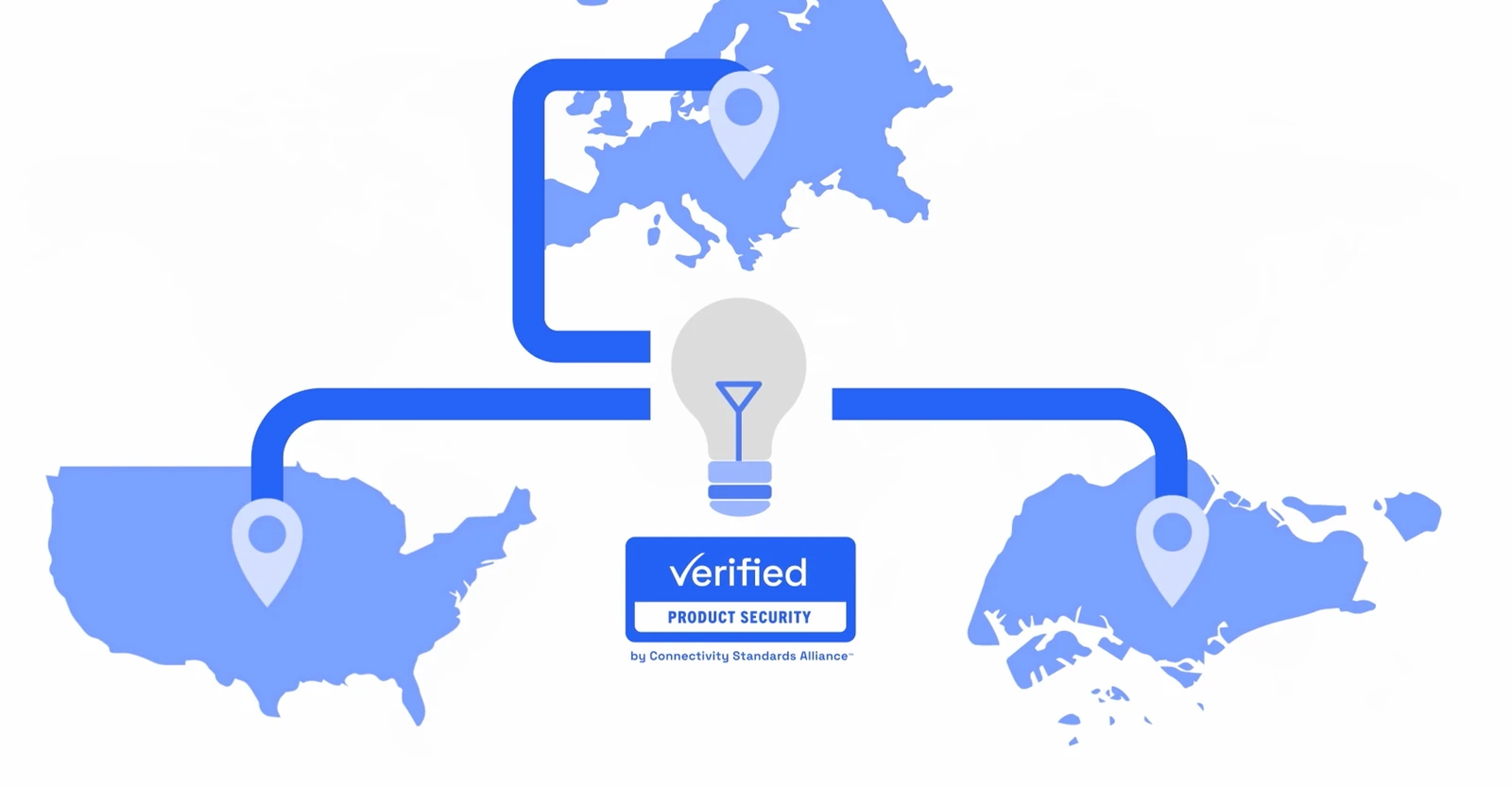
From the U.S. IoT Cybersecurity Improvement Act and the EU Cyber Resilience Act, to the UK’s Product Security and Telecommunications Infrastructure (PSTI) Act, major countries are successively implementing legislation that sets minimum security standards for IoT devices. These are no longer optional recommendations—they are mandatory conditions for selling products. Non-compliant devices are legally barred from entering these markets.
In this article, we review the current global landscape of IoT security regulations and certifications. We also explore the real-world challenges companies face in meeting compliance and the root causes behind them. Based on this, we introduce how the latest updates to Z-IoT help automate and streamline compliance with global security regulations.
2️⃣ Key IoT Security Regulations & Certifications Around the World
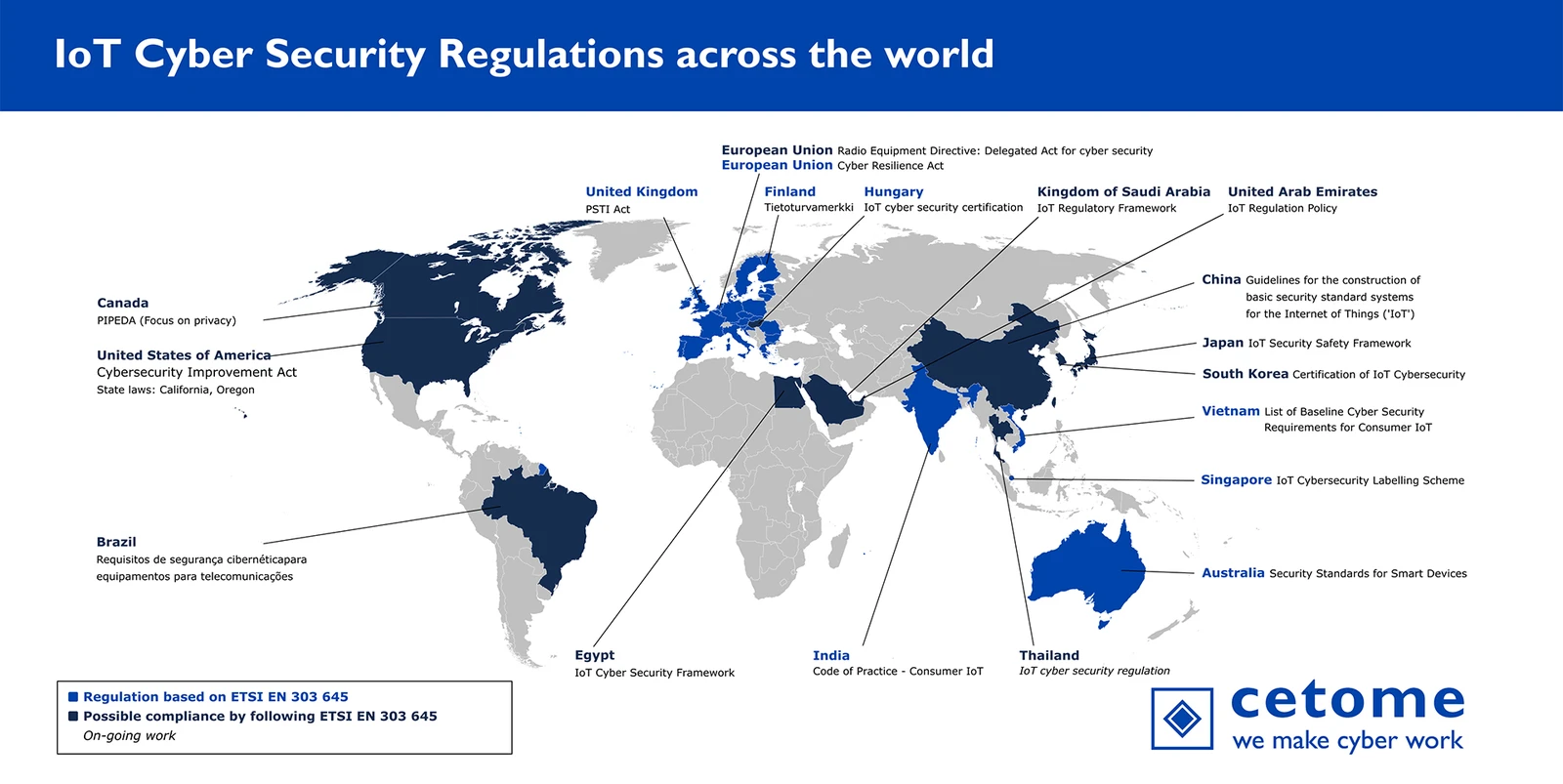
As of May 2025, around 19 countries have enacted IoT cybersecurity regulations or certification frameworks. Among these, NIST IR 8259 (U.S.) and ETSI EN 303 645 (Europe) are two widely recognized international standards. Let’s start by looking at how major countries are addressing IoT security compliance.
IoT Security Regulations & Certifications by Country
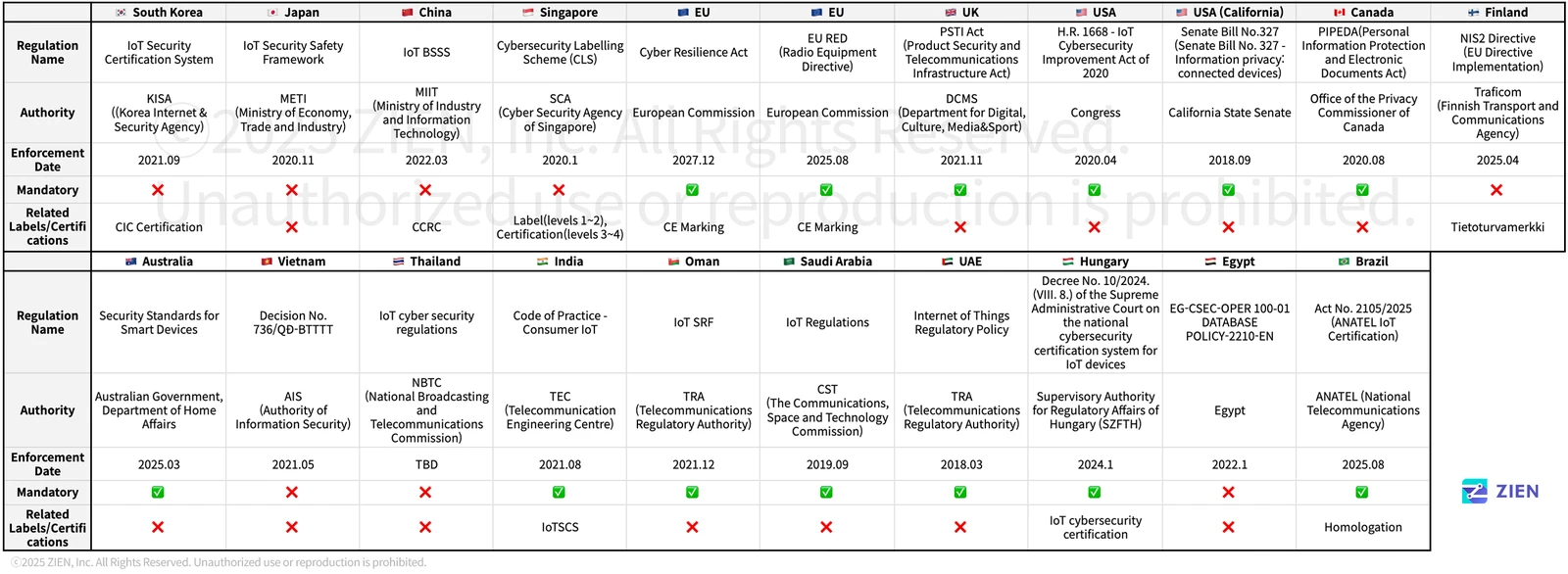
Among the many regulations worldwide, the following four standards and certification systems are the most influential in terms of technical depth and policy impact. While ETSI EN 303 645 and NIST IR 8259 serve as foundational frameworks for many national regulations, CE Certification (EU) and the Cyber Trust Mark (U.S.) represent essential security benchmarks in the world’s two largest markets.
Top 4 Global IoT Security Regulations & Certifications
ETSI EN 303 645 - Europe

Developed by the European Telecommunications Standards Institute (ETSI), this is an international cybersecurity standard for consumer IoT devices. It includes 13 core provisions, each with detailed implementation requirements.
This standard underpins the EU's Radio Equipment Directive (RED) and Cyber Resilience Act (CRA). Starting in 2025, all IoT products sold in the EU must comply with ETSI EN 303 645, making it a critical baseline for market access.CE Certification - EU

CE certification is a mandatory conformity marking for products sold within the European Economic Area (EEA). Following recent amendments to the RED and the adoption of the CRA, cybersecurity requirements are now included as part of CE compliance.
IoT devices must now demonstrate capabilities such as secure updates, data integrity protection, and user data safeguards—well beyond traditional electromagnetic compatibility standards. As such, compliance with ETSI EN 303 645 has effectively become a prerequisite for CE certification.NIST IR 8259 Series – United States
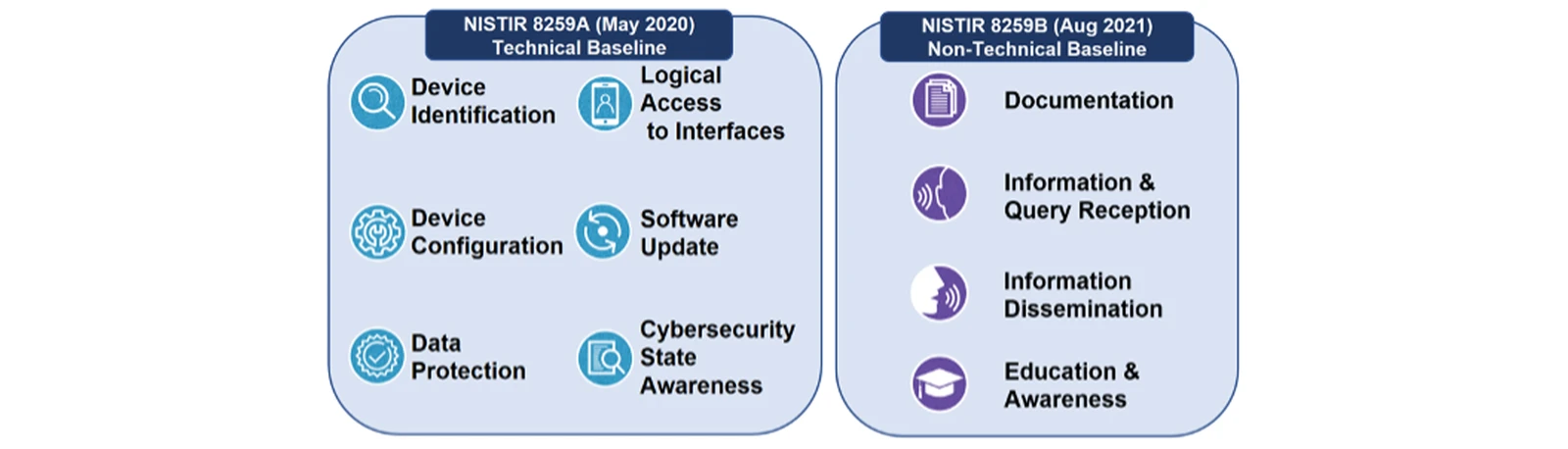
The NIST IR 8259 series, developed by the U.S. National Institute of Standards and Technology, outlines security standards for IoT devices and includes four documents: 8259, 8259A, 8259B, and 8259C.
These documents provide a checklist of essential security features for manufacturers and procurement guidelines for buyers. U.S. federal legislation—such as the NDAA and the IoT Cybersecurity Improvement Act—mandates compliance with these standards for public-sector IoT purchases.
Cyber Trust Mark – United States

Introduced by the Federal Communications Commission (FCC) in 2023, the Cyber Trust Mark is a consumer-facing security certification label for IoT products.
Using a QR-code-based label on packaging or promotional materials, it allows consumers to verify a product's security rating at a glance. Manufacturers must meet defined security criteria and undergo assessment to earn the mark. Implementation began in 2025, starting with smart home devices, with broader expansion expected.
South Korea’s IoT Security Certification System
In South Korea, the Information and Communication Network Connection Device Security Certification system has been in place since December 2017. Administered by the Ministry of Science and ICT and KISA (Korea Internet & Security Agency), it evaluates the security posture of IoT devices based on defined certification criteria.
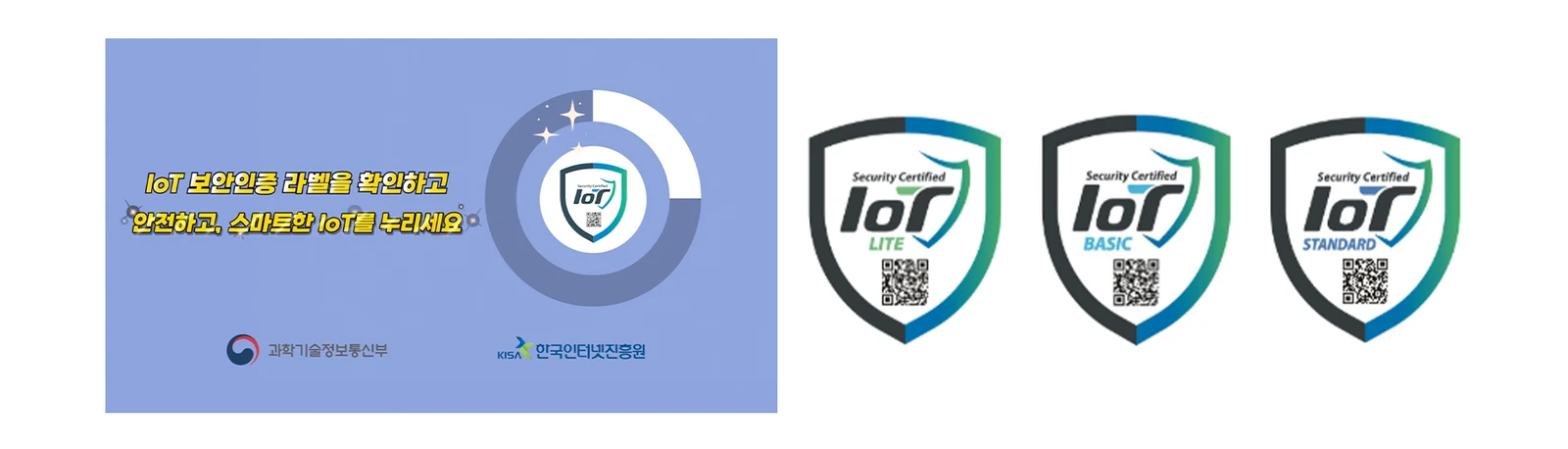
The certification is structured into three levels—Lite, Basic, and Standard—depending on product type and required security assurance. Each level involves different technical requirements and evaluation benchmarks. Certification timelines range from 6 weeks (Lite) to over 12 weeks (Standard), and SMEs are eligible for fee reductions.
Certified products may display the Information Protection Certification Label, making their compliance easily recognizable to consumers.
While the scope, enforcement mechanisms, and certification methods differ by country, the global trend is unmistakable: IoT security regulation is tightening. For manufacturers and vendors, being able to quickly identify applicable standards and efficiently prepare for certification is becoming a key competitive advantage.
3️⃣ Industry-Specific IoT Security Regulations and Certifications: Maritime, Automotive, and Drone Sectors
As IoT technologies are increasingly applied across various industries, sector-specific IoT security requirements and certification systems are emerging. In safety-critical sectors such as maritime, automotive, and drones, where cybersecurity incidents can directly endanger human lives, regulations are tightening at both international and national levels.
🚢 Maritime
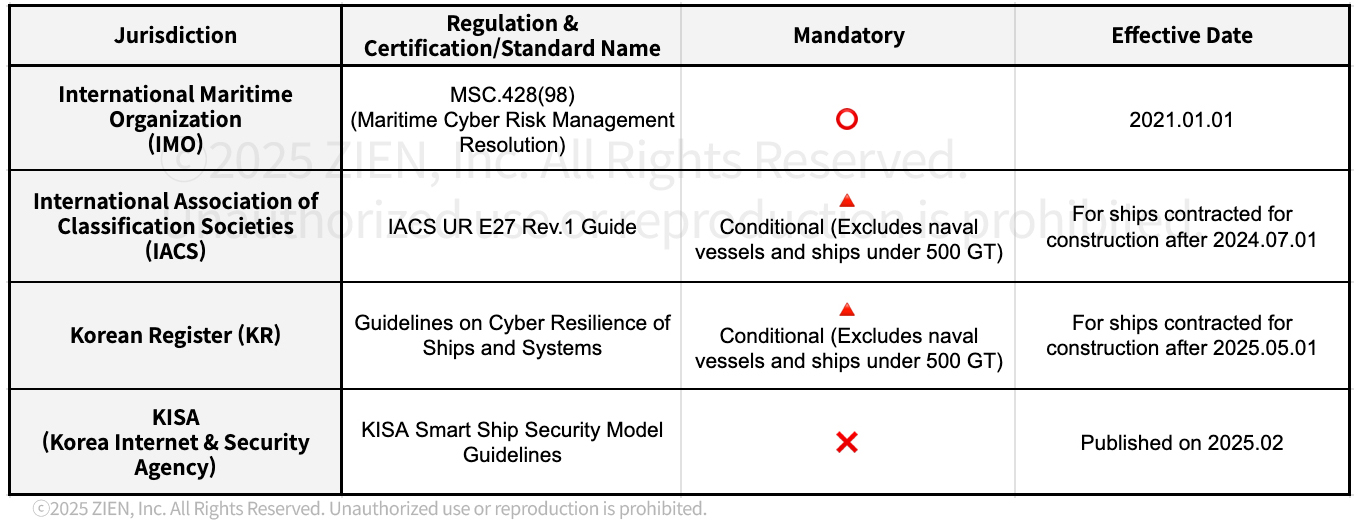
The International Maritime Organization (IMO) introduced cybersecurity requirements through MSC.428(98), mandating that all ships and shipping companies integrate cyber risk management into the International Safety Management (ISM) Code. In addition, the International Association of Classification Societies (IACS) issued UR E27, which sets forth technical cybersecurity standards for shipboard systems.
South Korea is actively aligning with these international efforts. The government has developed smart ship security models and is supporting private shipping companies through technical assistance and subsidies to help them acquire international certifications. The Ministry of Oceans and Fisheries is also working to legislate a cyber safety management system by 2027, signaling that security certification and oversight for the maritime industry will become increasingly rigorous.
🚗 Automotive
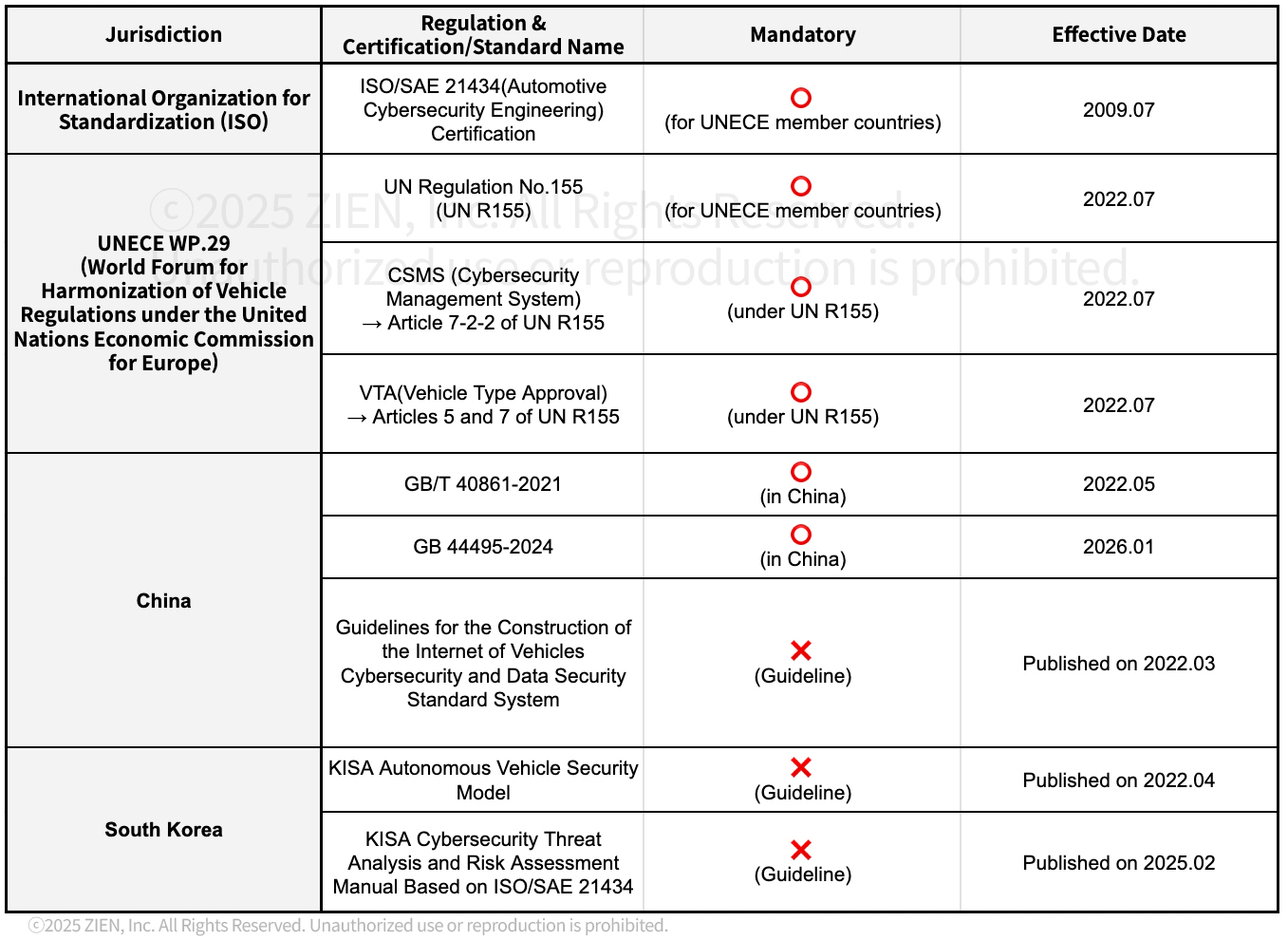
With the rise of autonomous driving and connected vehicles, the automotive industry is facing rapidly evolving cybersecurity requirements. The United Nations Economic Commission for Europe (UNECE) mandates the implementation of Cybersecurity Management Systems (CSMS) and Vehicle Type Approval (VTA) under UN Regulation No. 155 (UN R155). Automakers in UNECE member countries are actively preparing for these certifications.
In China, independent regulatory frameworks require mandatory certification for domestic sales. South Korea is also supporting its automotive industry through security model frameworks for autonomous vehicles and threat analysis manuals to assist with compliance.
Drones
Drones integrate multiple IoT technologies—wireless communication, GPS navigation, and remote control—which also makes them particularly vulnerable to threats like hacking, spoofing, and command hijacking. In response, international standards and national-level guidelines are emerging, and discussions are underway to implement security certification systems tailored to drone operations.
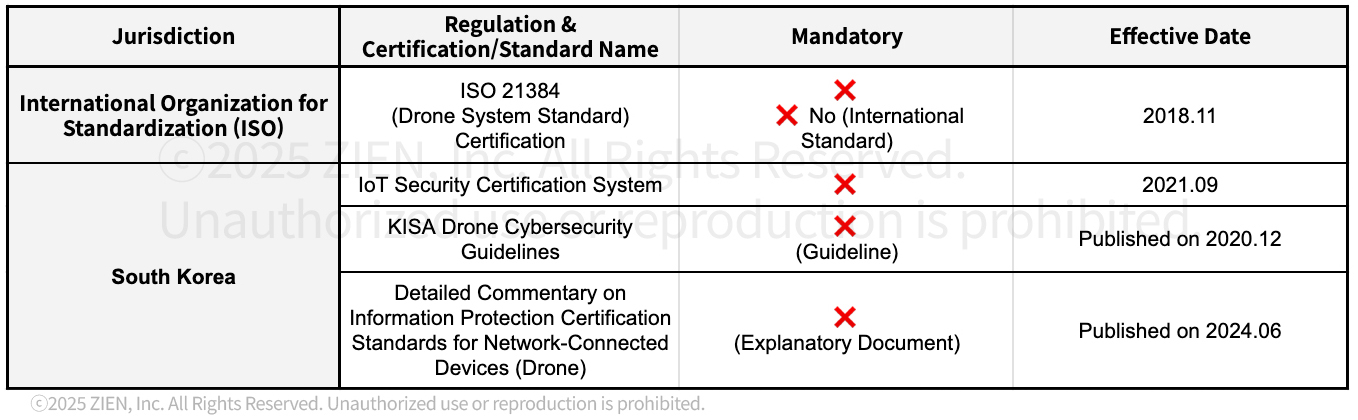
As these examples show, specialized security regulations are taking shape across industries, with a clear trend toward mandatory compliance. In sectors where safety is paramount, such as maritime and automotive, regulatory enforcement is becoming stricter—demanding proactive preparation from all stakeholders.
4️⃣ Challenges Companies Face in Meeting Global IoT Security Regulations
While the increasing variety of global and industry-specific security standards helps improve overall IoT security, it also poses significant challenges for companies seeking to enter international markets.
Organizations must comply with a diverse array of requirements, including different technical criteria, documentation formats, certification processes, and renewal cycles—all of which vary by country. Because these standards lack unification, companies need considerable time, expertise, and resources to analyze and meet them.
For small and medium-sized enterprises (SMEs), the challenge is even greater due to a lack of specialized personnel with the skills to interpret and implement these complex regulatory demands. Security compliance also extends beyond technical tasks, often requiring knowledge of legal and procedural frameworks, making it difficult for development teams alone to manage certification efforts.
In practice, many companies express confusion and frustration:
"We’re not sure which country’s standards apply to us."
"We’ve never been through certification and don’t know where to start."
Key Challenges in Global IoT Security Compliance
Regulatory Diversity and Complexity: Each country and industry has different frameworks, technical requirements, and certification criteria. Companies must navigate and interpret a vast volume of regulatory documents to identify relevant standards.
High Costs and Long Timelines: Certification often involves extensive documentation, third-party testing, and iterative review processes, requiring significant time and financial investment. For industries where speed to market is critical, these delays can be a major competitive disadvantage.
Shortage of Specialized Talent: Many SMEs lack security experts who understand both the technical and regulatory aspects of compliance. Without this expertise, it’s difficult to even begin preparing for certification.
Continuous Compliance Pressure: As regulations evolve, companies face ongoing pressure to track and respond to changes in real time, increasing operational burdens.
Regulatory Conflicts: In some cases, country-specific regulations conflict with one another due to the lack of global standardization. Companies must make difficult trade-offs or develop region-specific solutions, increasing complexity and cost.
In light of these challenges, there's a growing need for automated solutions that can help companies manage global compliance more efficiently. In the next section, we explore how Z-IoT's automated regulatory compliance features address these issues.
5️⃣ Z-IoT: Automated Global Security Compliance Features
As discussed, keeping up with diverse and evolving IoT security regulations is a substantial burden—especially for companies with limited internal resources. Z-IoT is designed to ease this burden through its Global Regulatory Compliance Automation capabilities.
Z-IoT uses the core security requirements from leading global standards—NIST IR 8259 (U.S.) and ETSI EN 303 645 (Europe)—as its analysis framework. It automatically maps firmware security assessment results against these standards, clearly identifying which items are non-compliant or partially compliant.
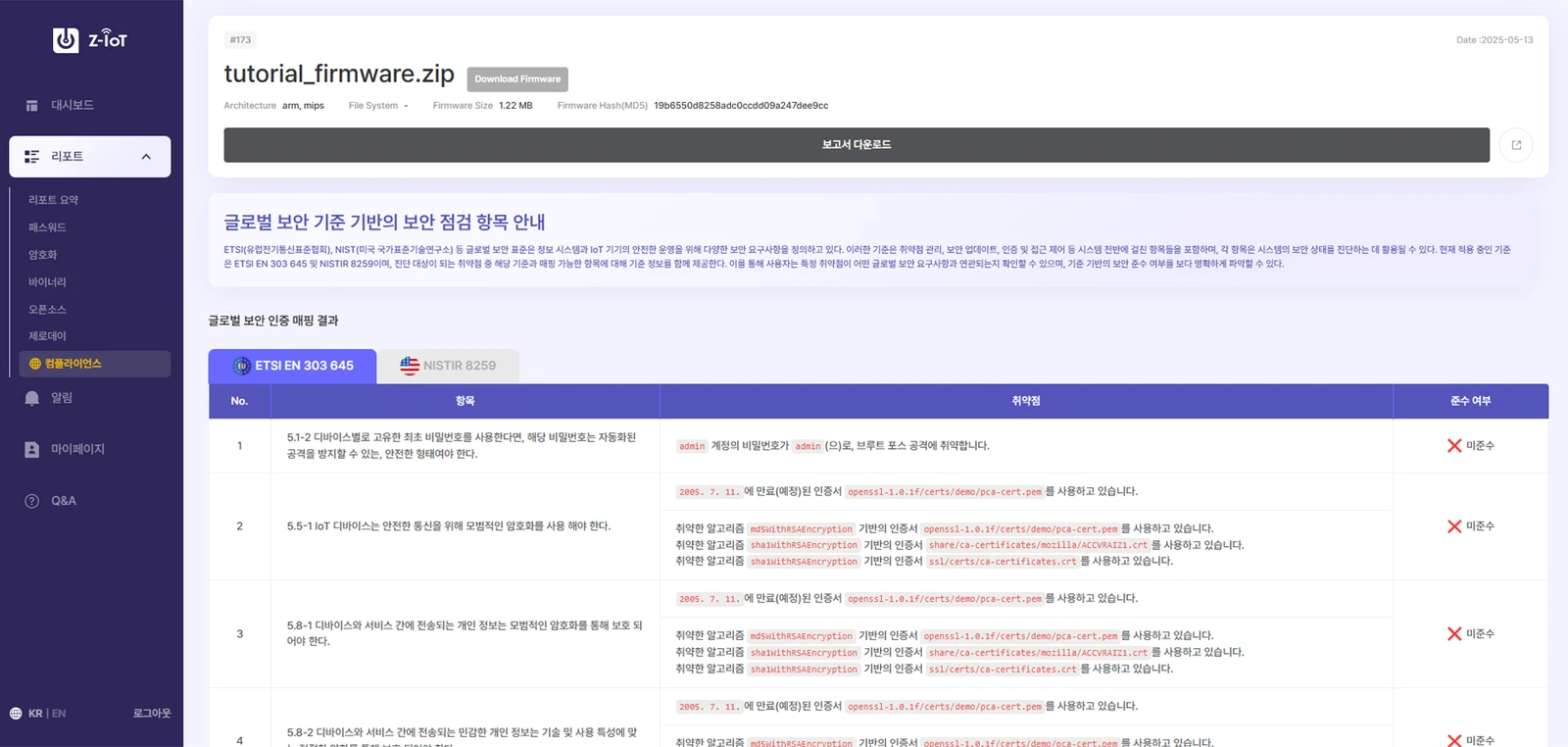
▶︎ How It Works
On the firmware analysis results page, click the "Compliance" button located in the top sidebar.
View the "Mapping Results Modal", which displays the compliance status—highlighting non-compliant or partially compliant items.
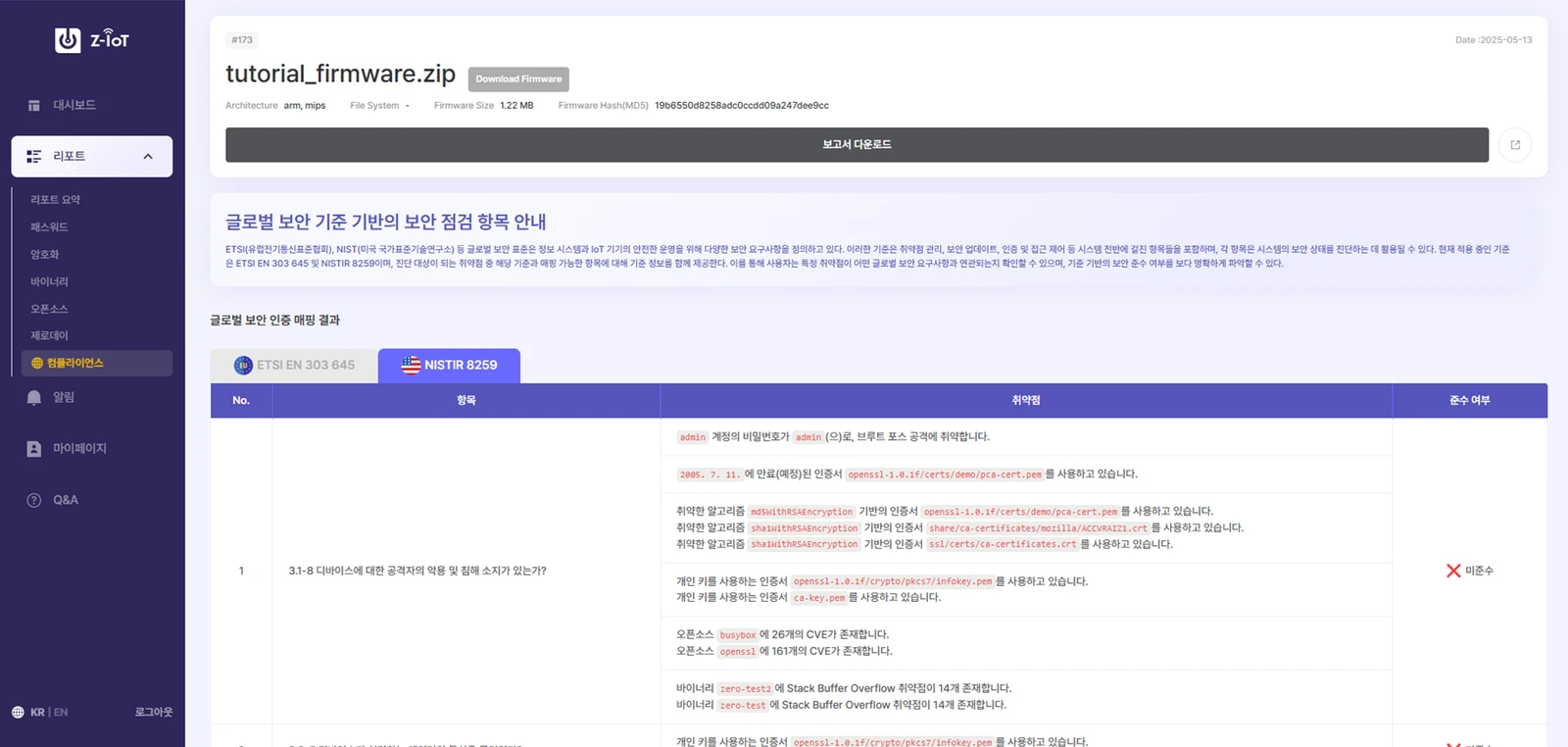
This feature enables companies to perform quick, initial diagnostics to assess their readiness for entering global markets. While the current version focuses on mapping and visualizing compliance status, it does not yet include detailed interpretations or remediation guidance for each issue.
In future updates, Z-IoT plans to offer more actionable insights—such as remediation guides for non-compliant items and customized regulatory mappings by country and industry.
6️⃣ Conclusion
As IoT adoption accelerates, security regulations are becoming more comprehensive and enforceable—with many countries already mandating compliance as a legal requirement. For companies, this makes it essential to adopt systematic, preemptive approaches to identifying vulnerabilities and meeting security standards before product launch.
With its automated compliance mapping features, Z-IoT is evolving beyond a diagnostic tool into a SaaS platform that supports global regulatory certification. As Z-IoT continues to expand its capabilities, we look forward to helping companies navigate complex security environments more efficiently and strategically.
<Source>
https://www.cybersecurity-lighthouse.com/main-standards/etsi-en-303-645/
https://www.nist.gov/itl/applied-cybersecurity/nist-cybersecurity-iot-program/nistir-8259-series
https://www.cepro.com/news/united-states-officially-launches-cyber-trust-mark/145335/
*This content is the original work of ZIEN Inc. and is protected under copyright law.
Any reproduction, distribution, transmission, publication, display, or creation of derivative works based on this content, in whole or in part, without prior written consent from ZIEN Inc. is strictly prohibited and may result in legal action.