
Contents
☑️ The Exponential Growth of IoT and the Critical Need for Security

The Internet of Things (IoT) device proliferation is driving rapid development in the cybersecurity market. With billions of devices now connected to the internet, hackers are diversifying their attack routes, and the complex IoT ecosystem is making these devices increasingly vulnerable.
In 2022 alone, cyber attacks on IoT devices surged by 300%, with approximately 57% of IoT systems potentially exposed to moderate or high-risk attacks. These statistics clearly underscore the urgent need for robust security measures.
As of 2024, projections indicated that over 75 billion IoT devices would be in use worldwide by 2025. As the number of devices grows exponentially, so does the risk of cyber attacks. Consequently, building a strong security framework to protect interconnected devices has become absolutely essential.
☑️ What is IoT Security?
IoT security refers to protecting networked devices like security cameras, vehicles, smart home appliances, and other computerized systems. It involves preventing, identifying, and monitoring potential risks associated with these interconnected technologies.
The core principle of IoT security is a multi-layered approach that safeguards devices and networks, maintains user privacy and data confidentiality, and ensures the stable operation of the IoT ecosystem. Ultimately, the primary goal is to protect user information and guarantee the security of devices and related infrastructure, enabling the IoT ecosystem to function smoothly and safely.
☑️ IoT Security Techniques
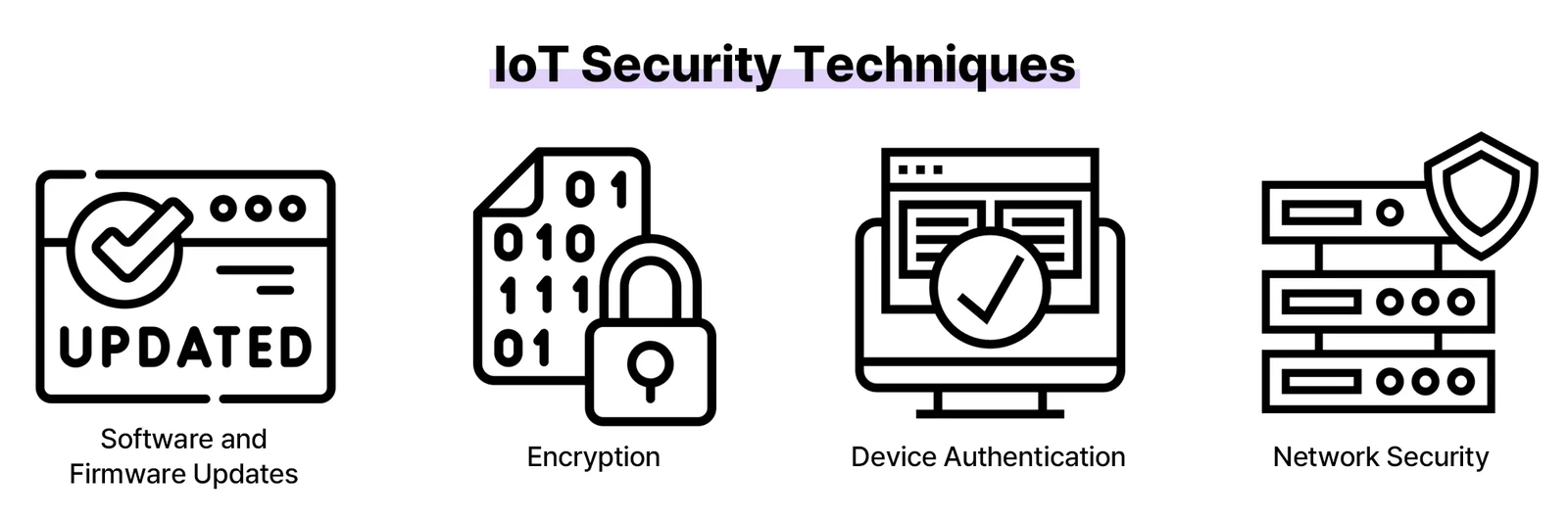
1. Software and Firmware Updates
Keeping software and firmware updated is crucial for maintaining IoT device security. When manufacturers discover security vulnerabilities and release patches or software updates, implementing these quickly is vital to prevent attackers from exploiting potential weaknesses.
Specifically, IoT devices with outdated software are significantly more vulnerable to security threats. Older software versions, weak web interfaces, and applications can compromise the entire IoT network's security. Maintaining the latest security patches is essential for protecting devices against both emerging and existing malware.
Since IoT device firmware updates are primarily managed by manufacturers, their security management capabilities directly impact device security.
2. Encryption
Encryption is a critical technique in IoT security for protecting data and preventing unauthorized access. Because IoT devices exchange data through networks, unencrypted data can be easily exposed to attackers. The diverse network connections of IoT devices further increase security risks.
Using secure network protocols like VPNs and HTTPS can make data interception challenging. VPNs protect communication between IoT devices and the internet, while HTTPS ensures secure communication between web-enabled IoT devices and servers.
Encryption methods for IoT security include symmetric encryption, asymmetric encryption, and hashing. By combining strong encryption algorithms with hardware-based key storage, organizations can enhance data protection and create secure network environments for IoT and mobile devices.
3. Device Authentication
IoT devices connect to various servers and networks to exchange information. Effective authentication procedures are essential to prevent unauthorized access and unverified requests. All connected devices and requests should be configured to be accessible only by authorized users, typically set up by manufacturers.
Device authentication primarily uses Public Key Infrastructure (PKI) and digital certificates to encrypt and decrypt messages between devices, ensuring their trustworthiness. Implementing strong authentication methods like two-factor authentication can further enhance security by restricting device access to authorized users.
Additionally, security gateways ensure safe communication within the network, and zero-trust architecture goes beyond traditional trust-based security models by thoroughly controlling all connections. Dynamic ID-based authentication in IoT networks helps block unnecessary access and prevent unauthorized devices from becoming potential threats.
4. Network Security
Network security is a critical element in ensuring IoT devices operate safely and are protected from remote attacks. Primarily, applying network segmentation and a Zero Trust approach is crucial. By segmenting IoT networks and implementing a zero-trust security model, we can isolate IoT devices in separate sub-networks, thus limiting the scope and impact of potential attacks.
When IoT devices are placed on the same network as other corporate systems or can access the internet, they create potential pathways for attackers with malicious intent. To prevent this, IoT devices should be deployed in environments separate from corporate networks, minimizing security risks to corporate systems. Moreover, by applying zero-trust policies that only permit approved access and block unnecessary connections, we can reduce potential attack vectors between IoT devices and corporate systems.
Additionally, closing unnecessary ports and controlling access through firewalls and Intrusion Detection Systems (IDS) is important. Firewall configurations and blocking unnecessary ports are effective means of preventing unauthorized external access. Furthermore, installing anti-malware programs and periodically applying system patches and the latest security updates are necessary to continuously strengthen security.
Lastly, using security gateways to examine the safe communication of all network-connected devices and applying encrypted communication and device authentication is an effective method. This allows monitoring suspicious activities in network traffic, reducing attack risks and improving IoT environment security.
☑️ Closing Remarks
The IoT market will continue to grow, and with it, security risks will become increasingly diverse. Companies and users must recognize IoT security not merely as a cost, but as an essential investment in long-term trust and stability.
The various security techniques discussed serve as fundamental and critical defensive lines protecting the IoT ecosystem. Through continuous attention and response, we must strive to ensure that future IoT devices can be used in increasingly safe and reliable ways.
<Reference Sources>