Contents
Introduction to CODEGATE
On July 11, 2025, the COEX Grand Ballroom in Seoul hosted CODEGATE 2025, a premier global security conference first held in 2008.
The event featured a large-scale Capture the Flag (CTF) competition, expert-led security sessions and
a wide range of interactive booths and experience zones.
CODEGATE has become a recognized stage in the international security community,
with CTF finalists advancing from online preliminaries to the on-site finals.
On-Site Highlights
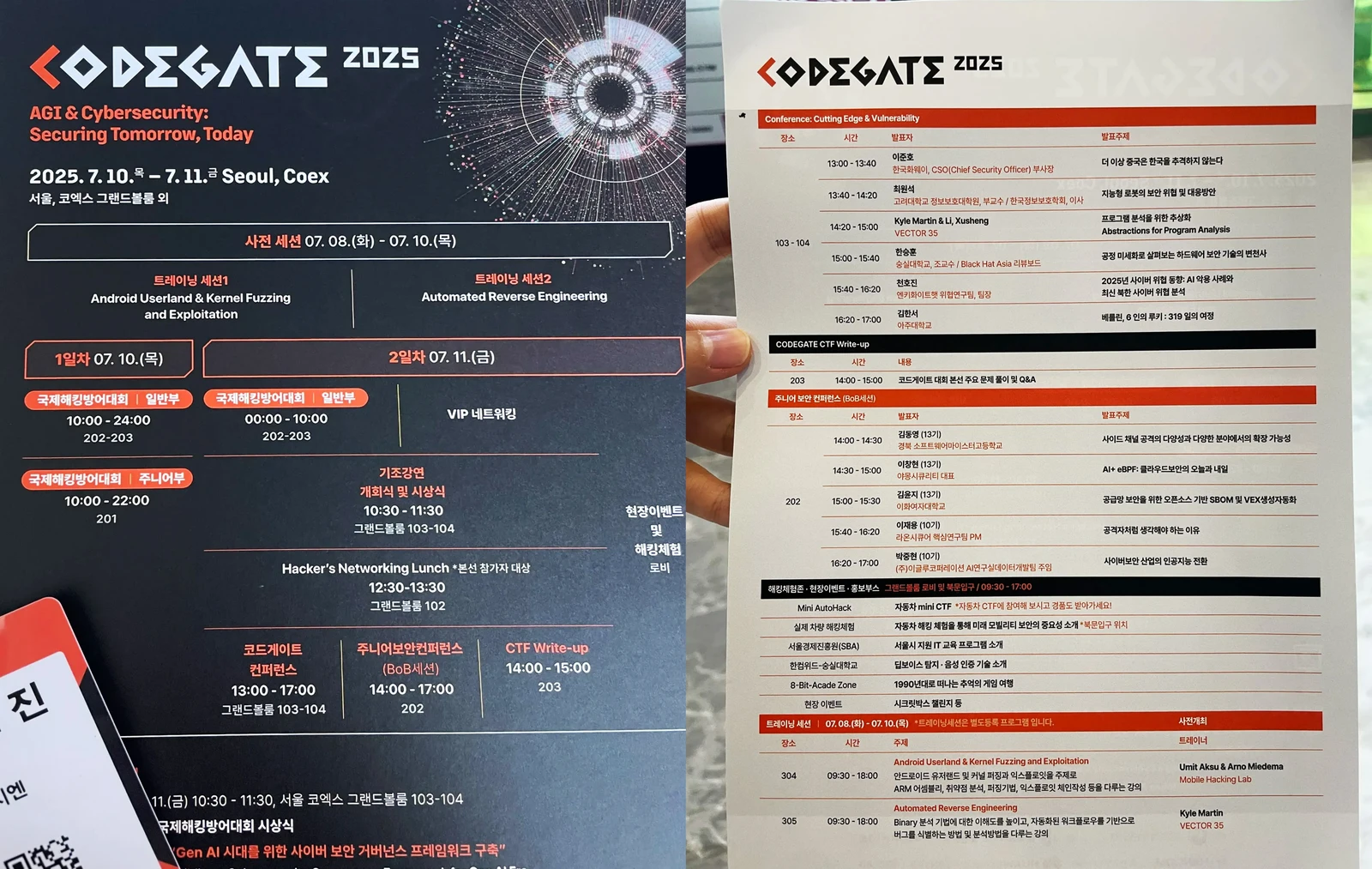
After registration, I received a pamphlet, entry card, and raffle ticket.
The pamphlet’s well-organized schedule and booth information made navigating the venue easy.
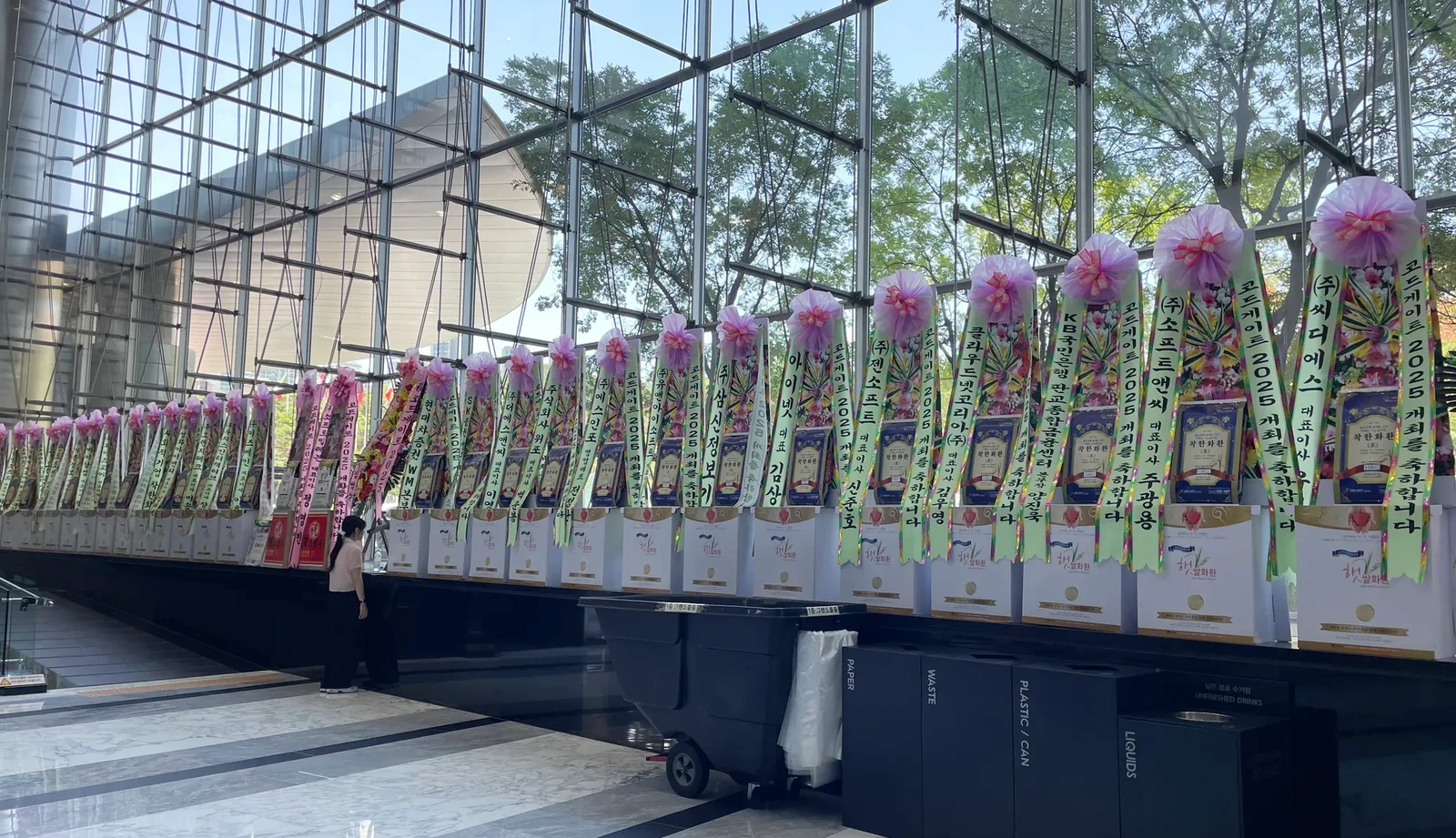
At the entrance, rows of eco-friendly “rice wreaths” stood proudly.
These are later donated to local communities—an inspiring gesture combining sustainability and charity.
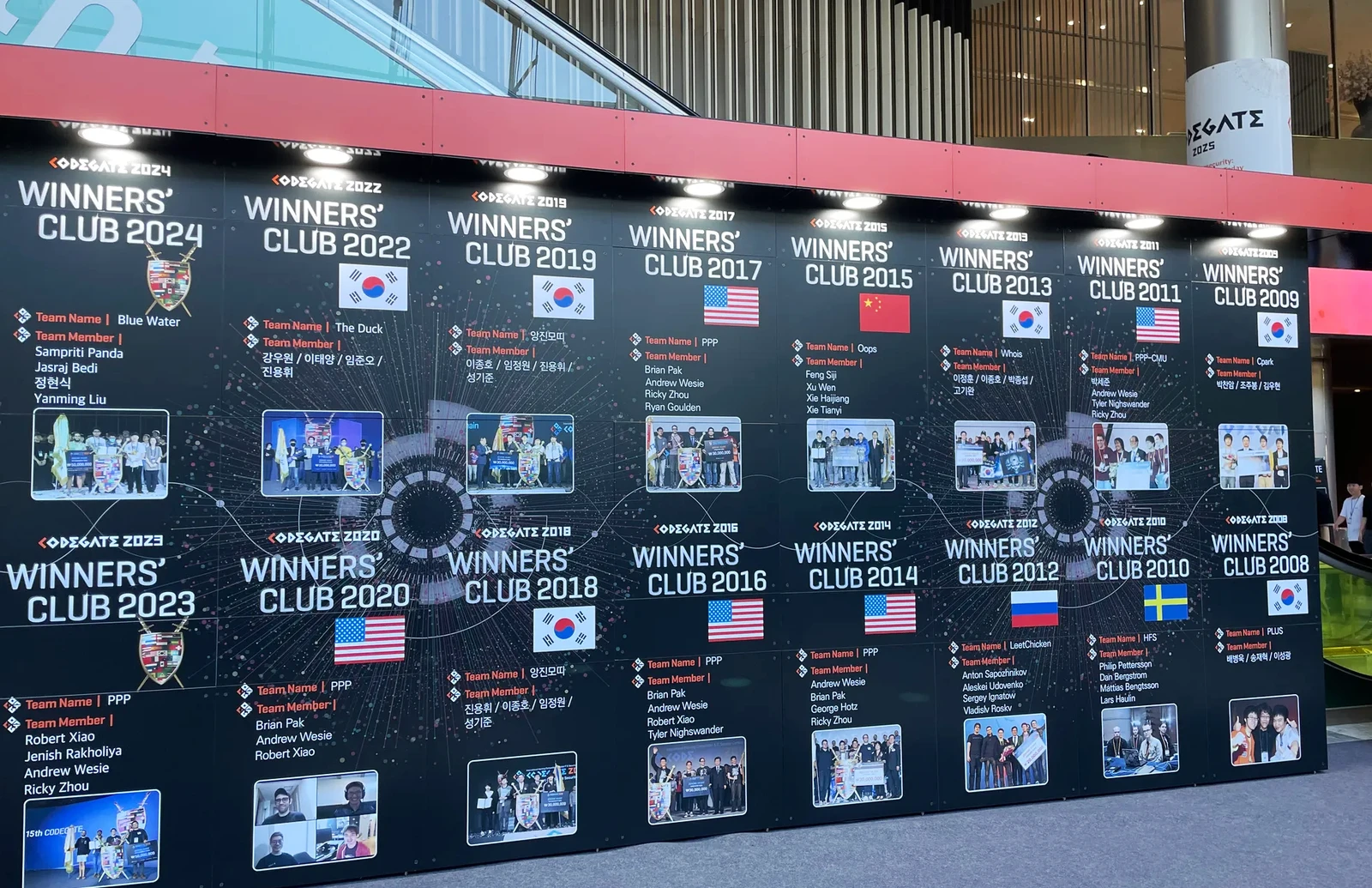
Exhibition panels also displayed photos of past winners, including global teams and notable Korean figures.
At CODEGATE 2025, Blue Water secured first place in the general division, while Sunrin Internet High School dominated the junior division, taking the top three spots.
CODEGATE featured not only formal sessions but also interactive booths and experience zones throughout the lobby
and outside the main hall. I browsed these before the sessions began.

Booth Experiences
8-Bit Arcade Zone
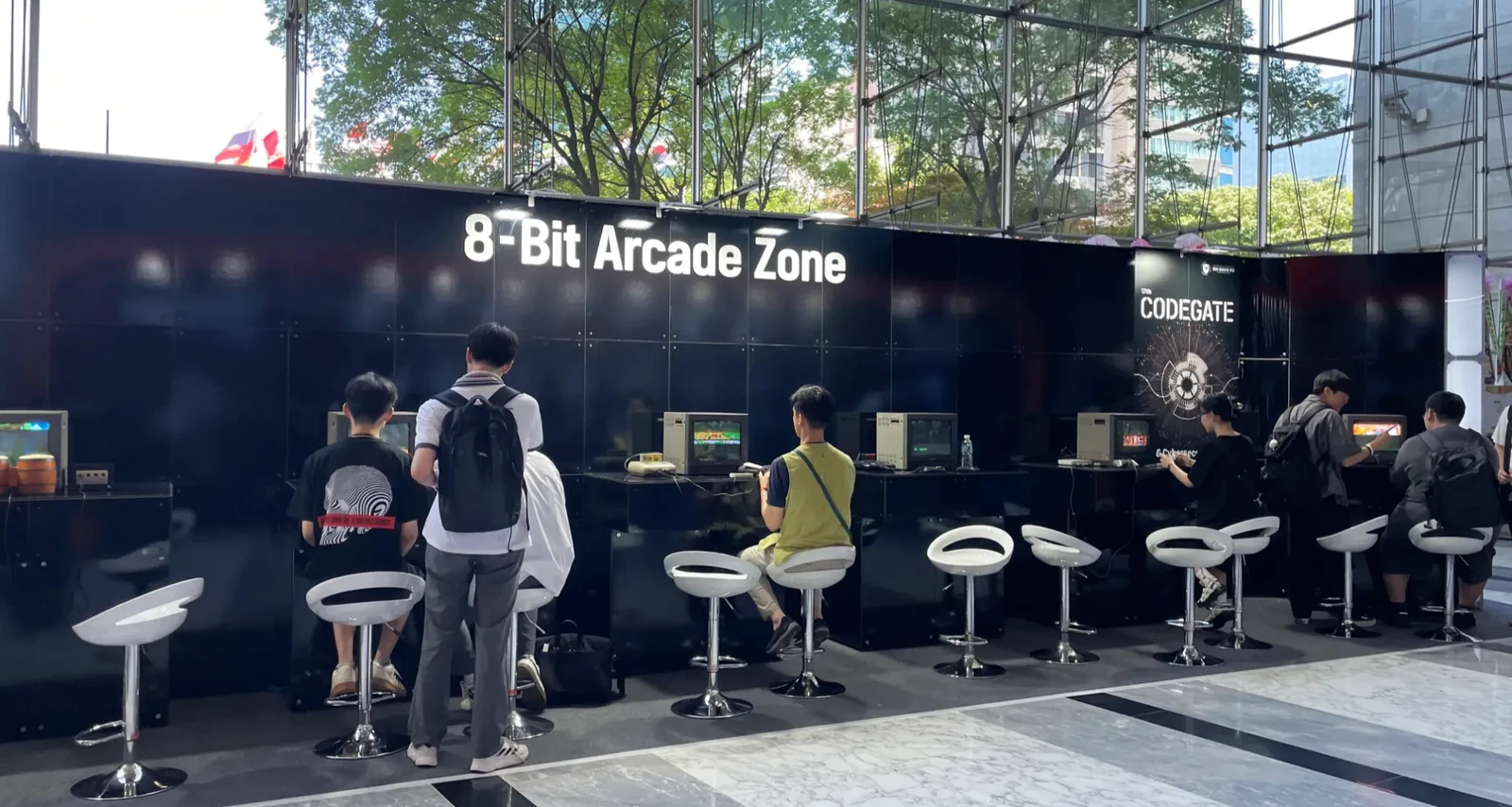
Located near the entrance, this space recreated 1990s arcade games. Attendees mingled freely and enjoyed
nostalgic titles reminiscent of childhood convenience store arcades.
It was notable that the conference actively applied gamification to make cybersecurity approachable and engaging.
Mini AutoHack
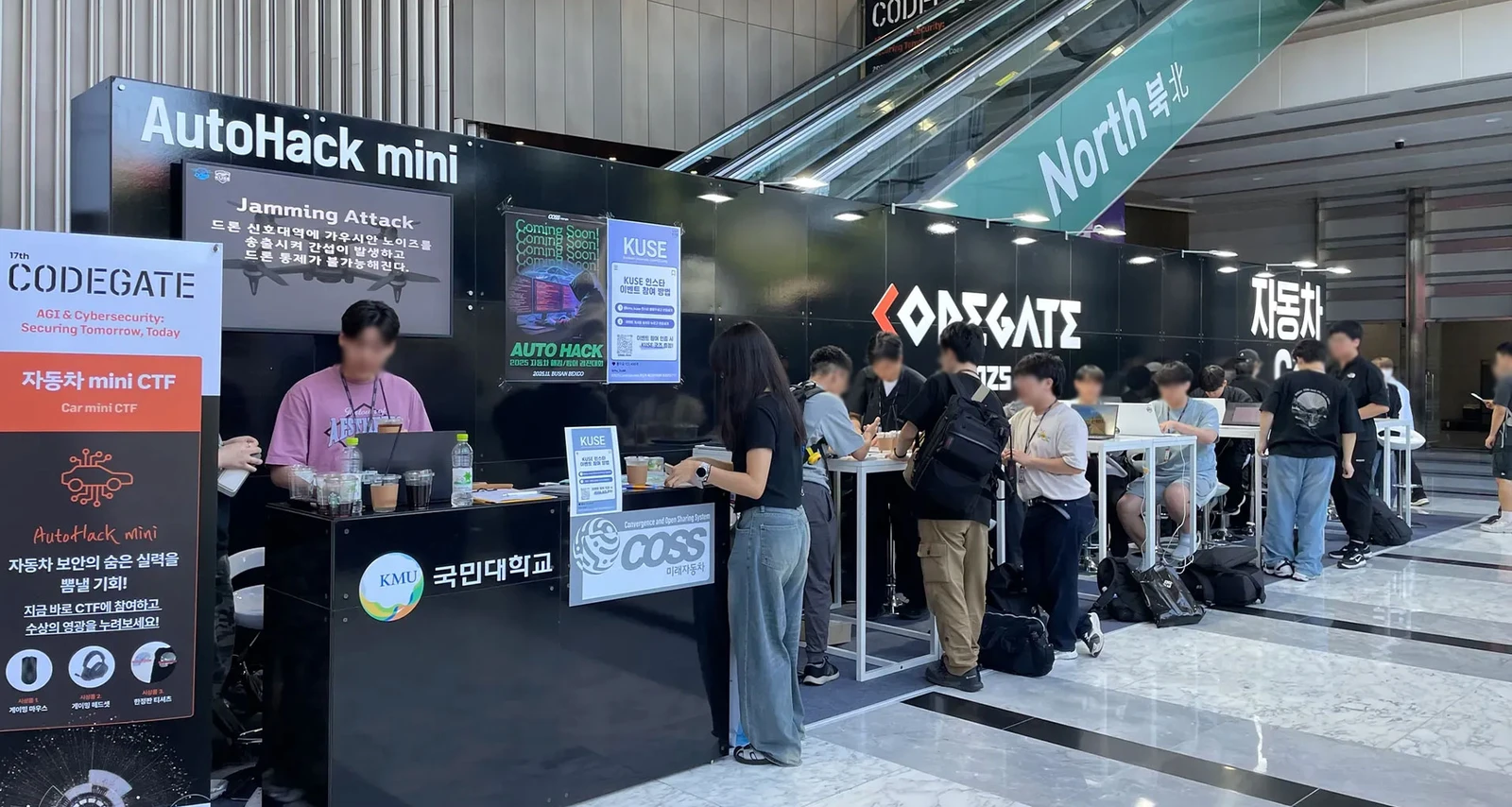
The KUSE (Kookmin University Auto-Cybersecurity Society) ran a booth offering mini automotive CTF challenges.
Though I couldn’t participate without my laptop, it reinforced the importance of industry-specific security training.
The booth staff also directed participants to a full-scale automotive hacking demo outside the hall.
Live Automotive Hacking
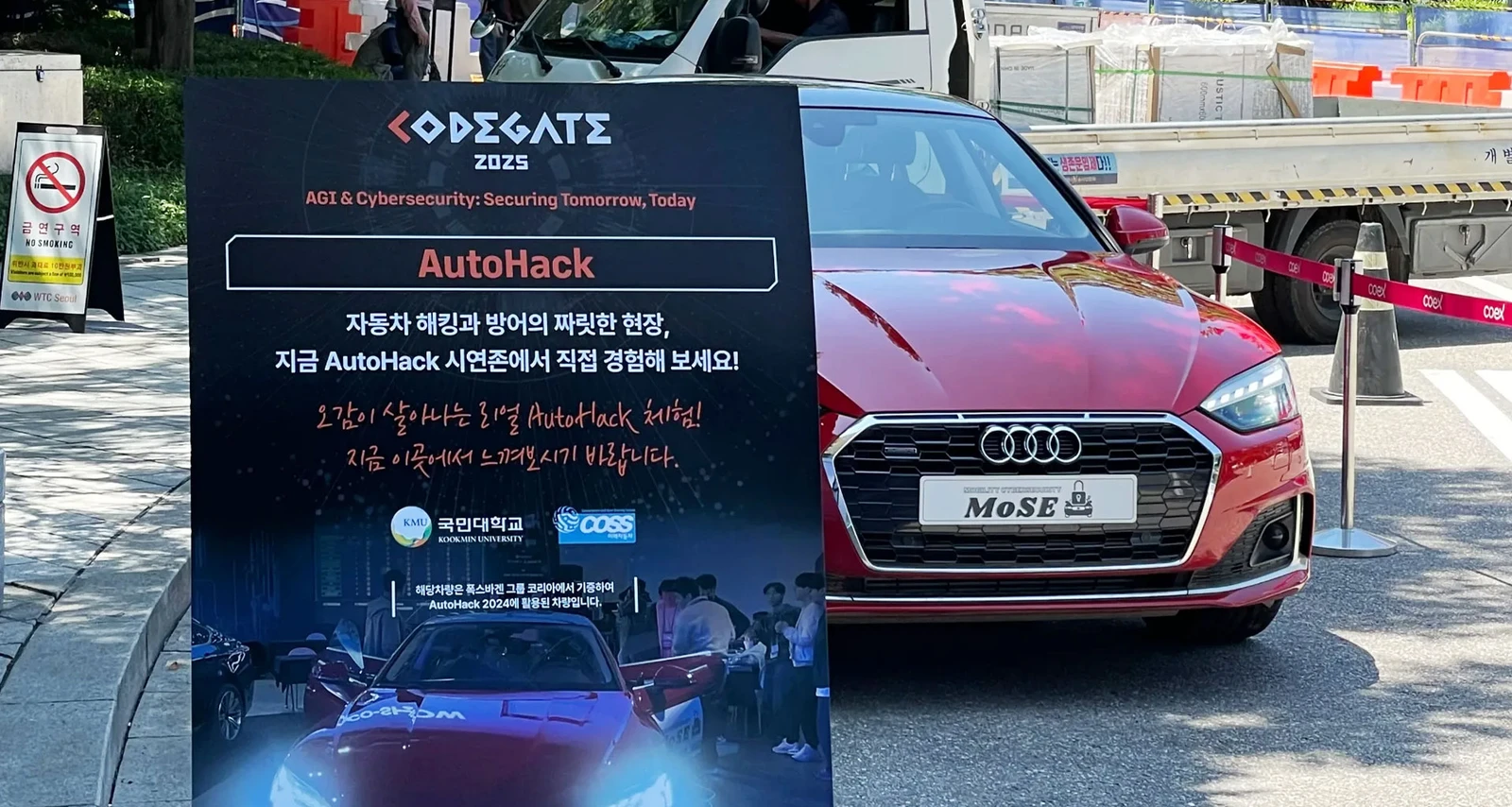
Also hosted by KUSE, this booth featured a Volkswagen Group Korea vehicle donated for hands-on hacking.
Using CLI commands, participants controlled windows, wipers, and headlights—an exercise that vividly demonstrated
how mobility systems operate over network signals, and why security-by-design is indispensable in automotive development.
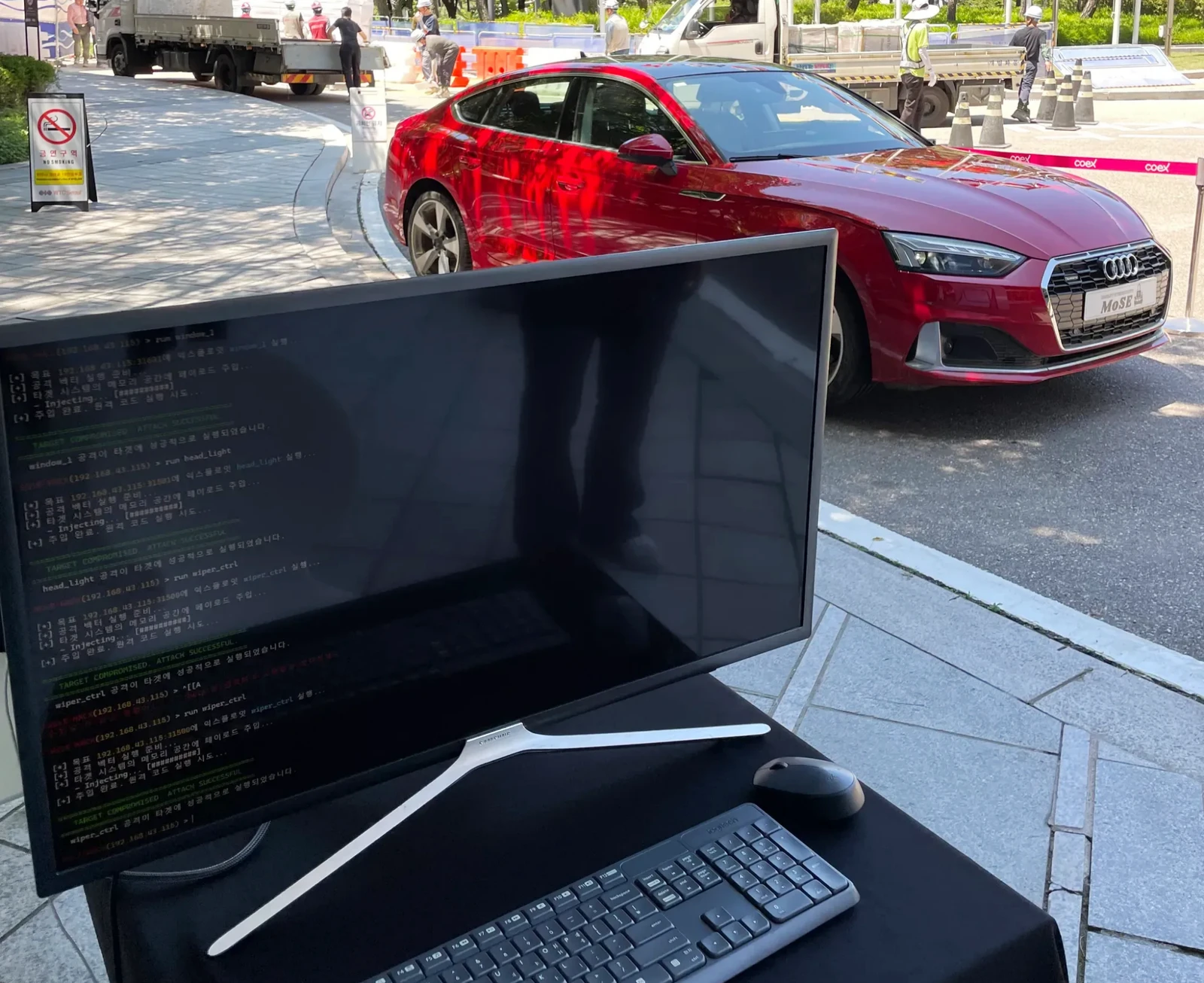
When starting, typing help displayed the available commands: scan and run <attack command>.
scan: Found connected vehicle IP addresses within the network.run <command>: Executed specific attack commands.
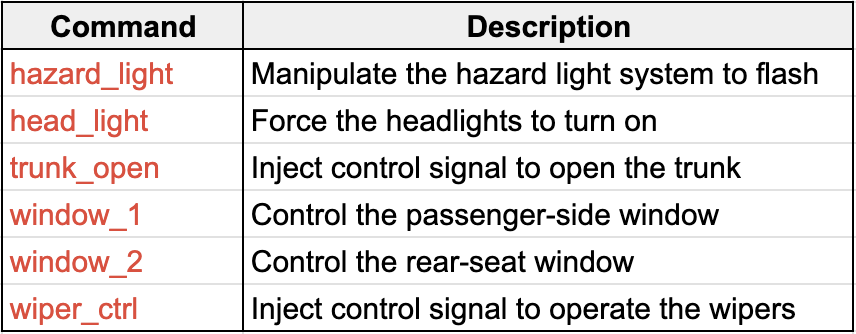
Implemented attack commands:
Side Events: Secret Box & Stick Catching
The event also featured fun activities such as the Secret Box puzzle and the Stick Catching game.
Both required either solving a challenge within a limited time or quick reflexes, making them similar in style to a CTF competition.
This allowed participants to stay fully engaged while indirectly training their security-oriented problem-solving mindset.
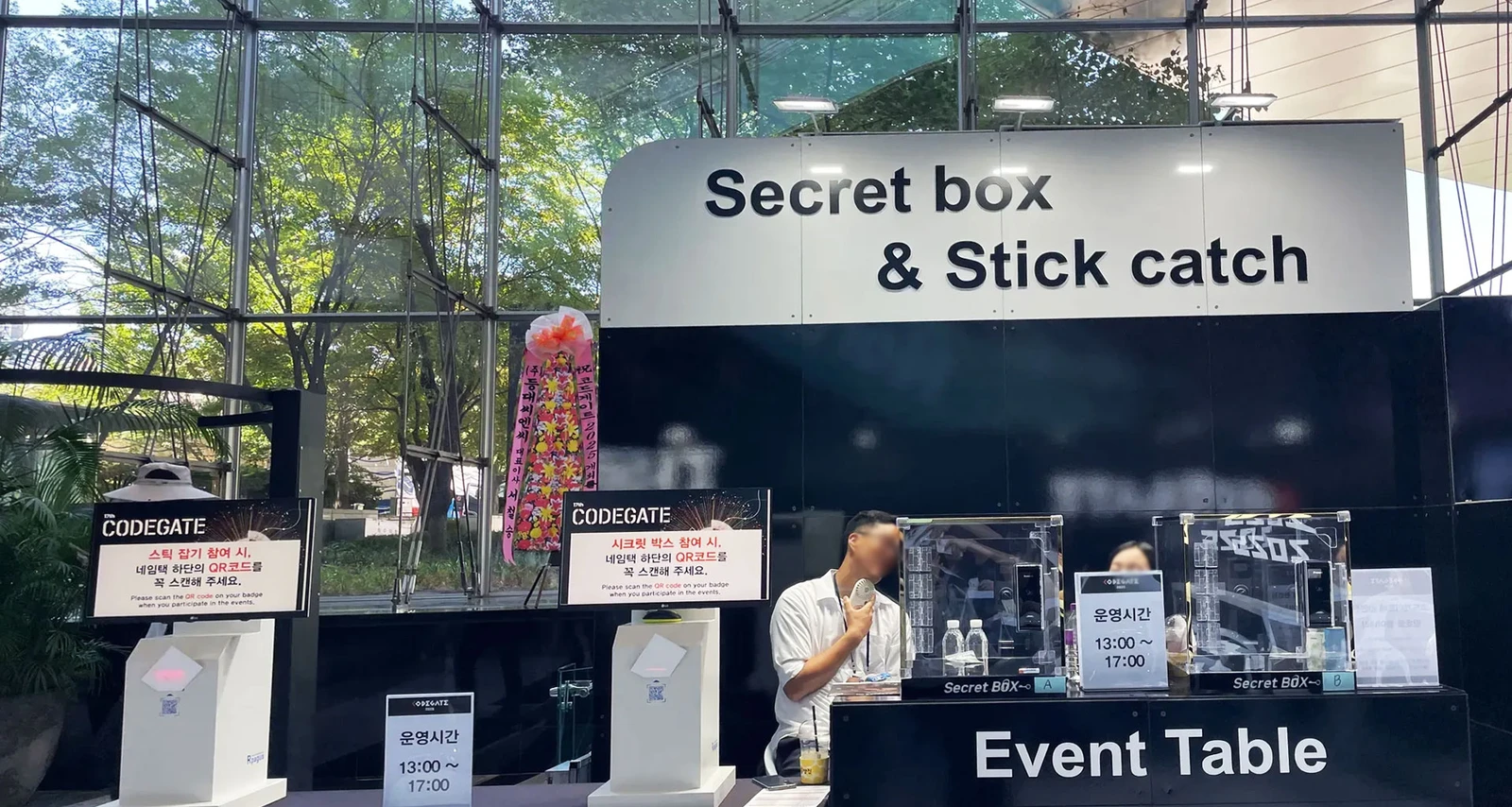
For the Secret Box puzzle, participants had to combine two hints to guess a 4-digit door lock code within the time limit.
(The correct answer is revealed at the end of this article!)
🔑  Crack the CODEGATE-themed puzzle (4 digits)

Clue 1: “CODEGATE is aging”
Clue 2: "Check the date it appears”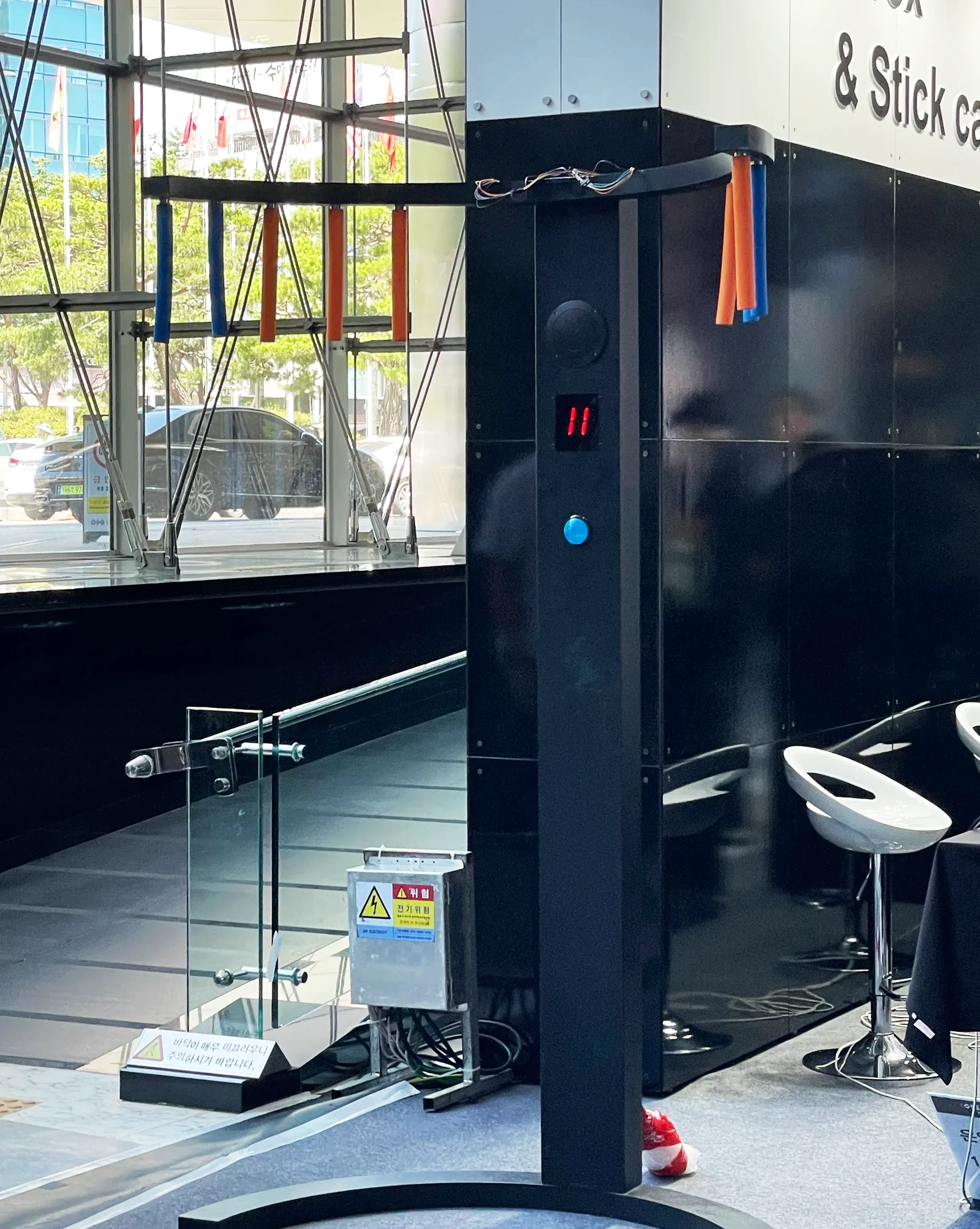
The Stick Catching game, a trending agility test on social media, involved catching sticks that dropped randomly with time gaps.
If you managed to grab 7 out of 11, you won a prize — but it turned out to be harder than it looked!
Merchandising
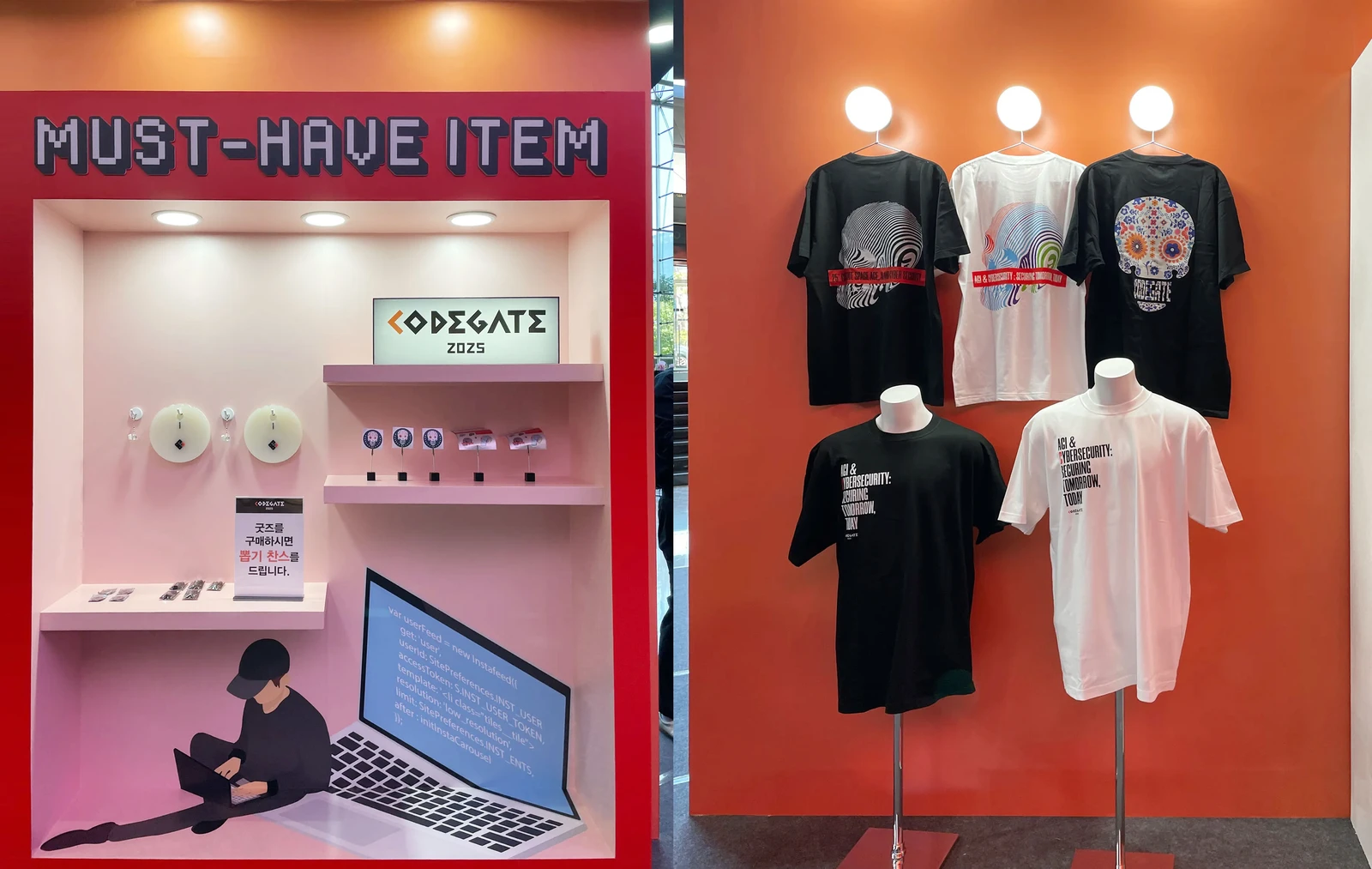
The goods shop sold CODEGATE-exclusive T-shirts, stickers, and keycap keychains.
More than souvenirs, these items fostered a sense of community belonging.
Conference Sessions
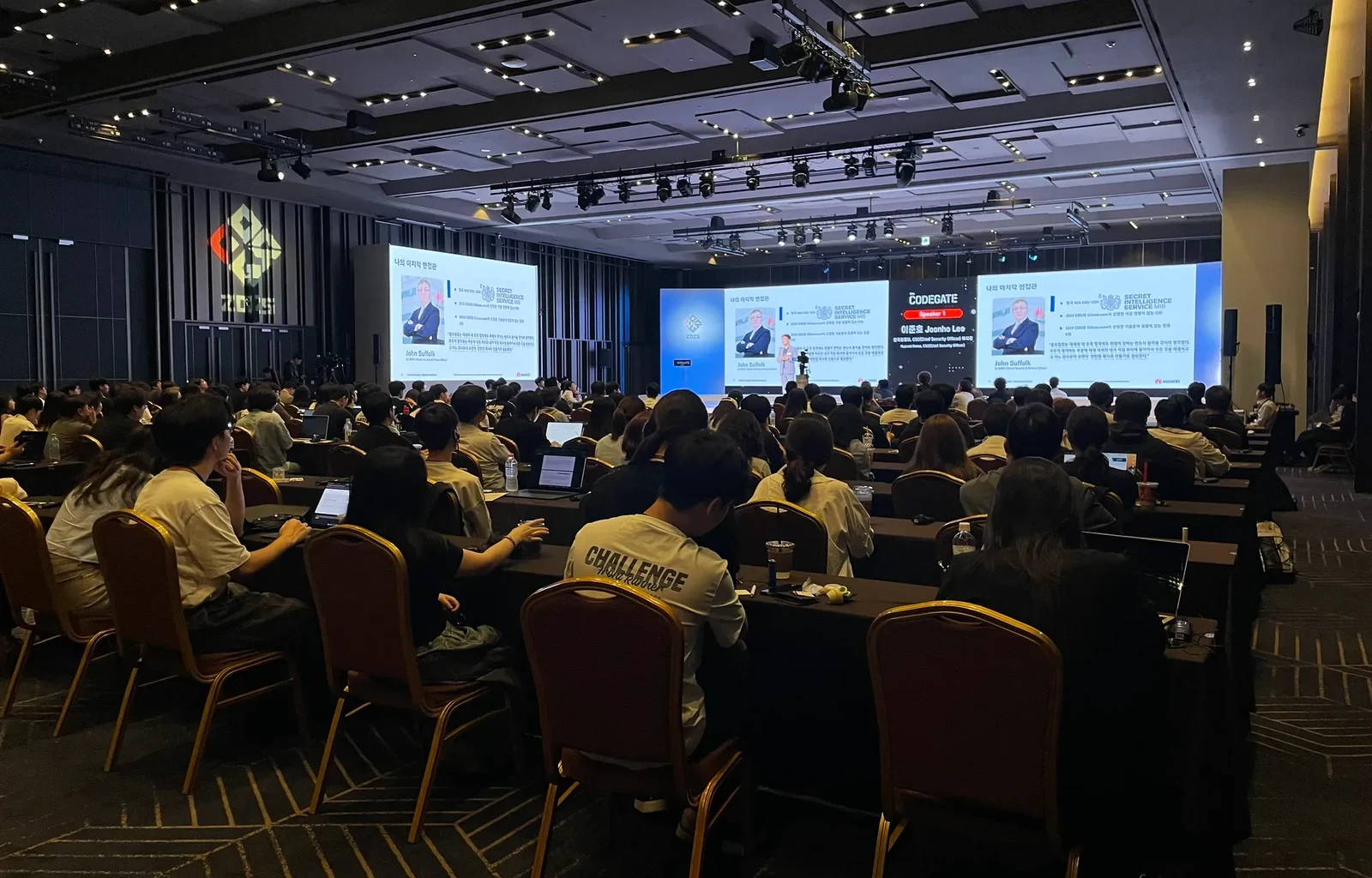
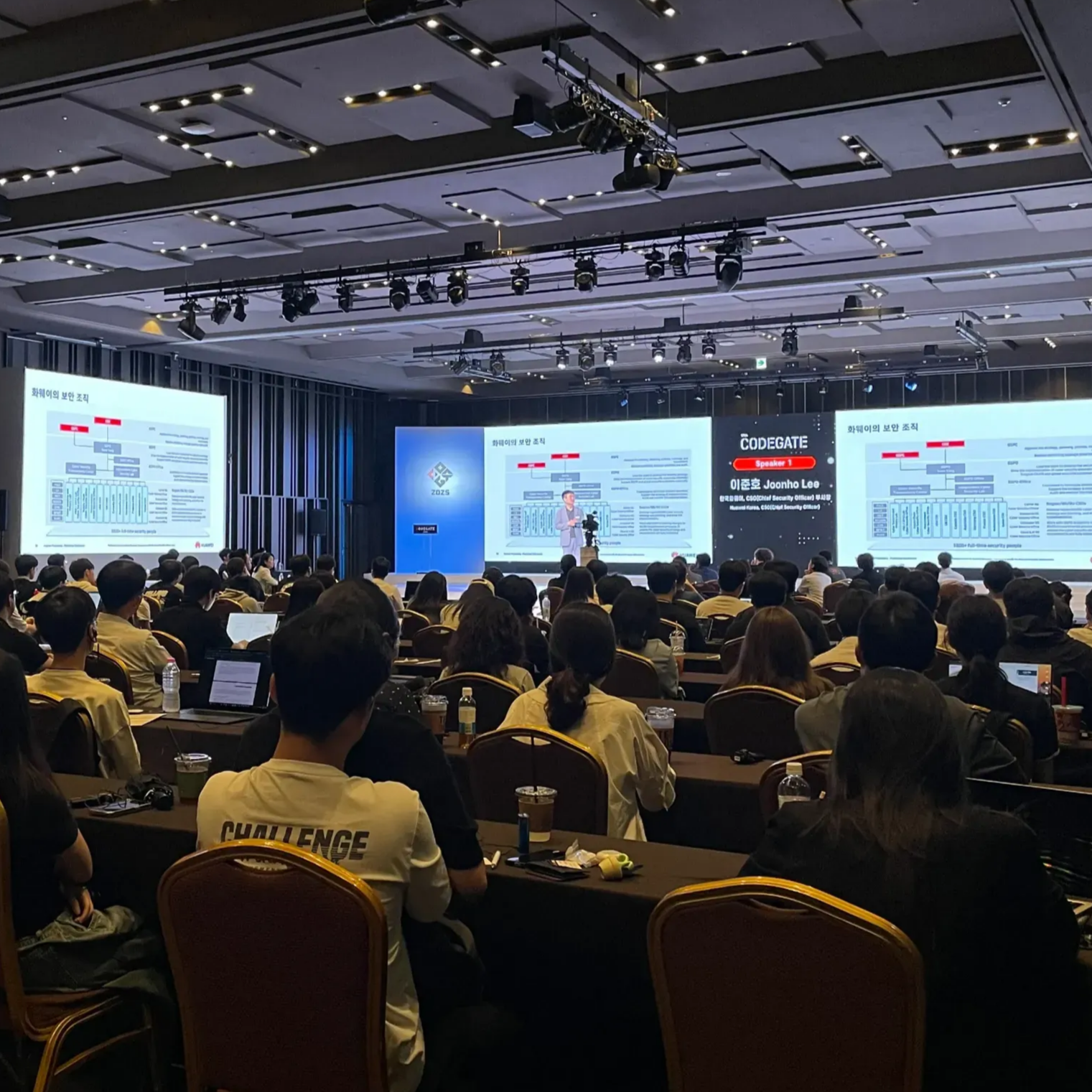
When entering the conference hall, the first sessions were already packed.
At first, many people stood, but chairs were added at the back midway through the session.
Large screens were placed at the front and on both sides, making the presentation materials easy to follow.
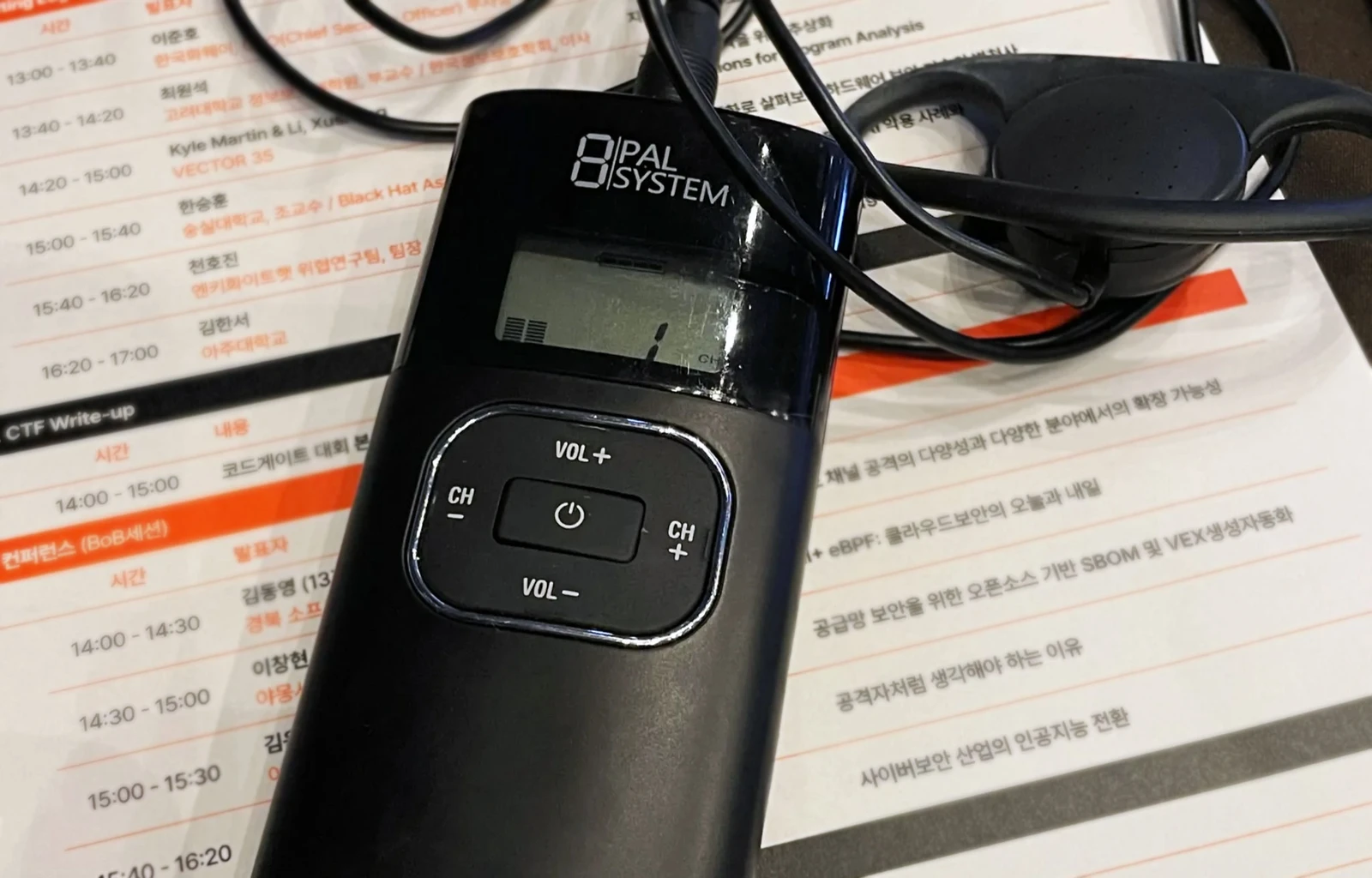
Earphones were also provided on the tables, enabling attendees to listen to simultaneous interpretation.
“China No Longer Trails Korea”
Speaker: Junho Lee, CSO, Huawei Korea
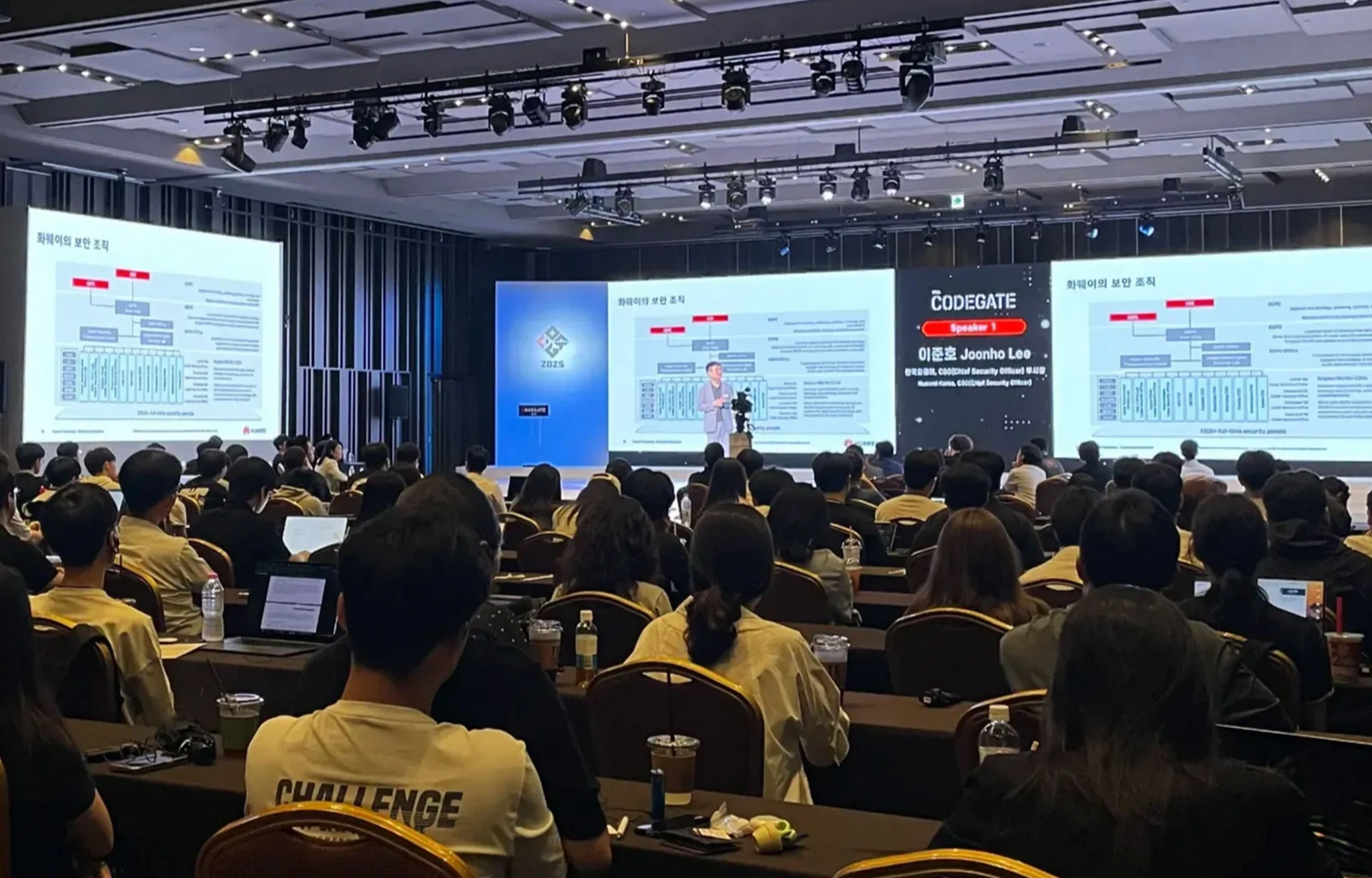
Lee emphasized that China already surpasses Korea in AI and robotics, driven by aggressive investment.
For example, while DeepSeek AI’s open-source low-cost model shocked the industry, multiple competitive alternatives exist.
His core message: Korea must avoid complacency, keep investing in R&D, and strengthen its open-source ecosystem.
Competitiveness now comes not just from technology, but from the surrounding ecosystem and strategy.
“Security Threats and Countermeasures for Intelligent Robots”
Speaker: Prof. Wonseok Choi, Korea University Graduate School of Information Security (Board Member, KIISC)
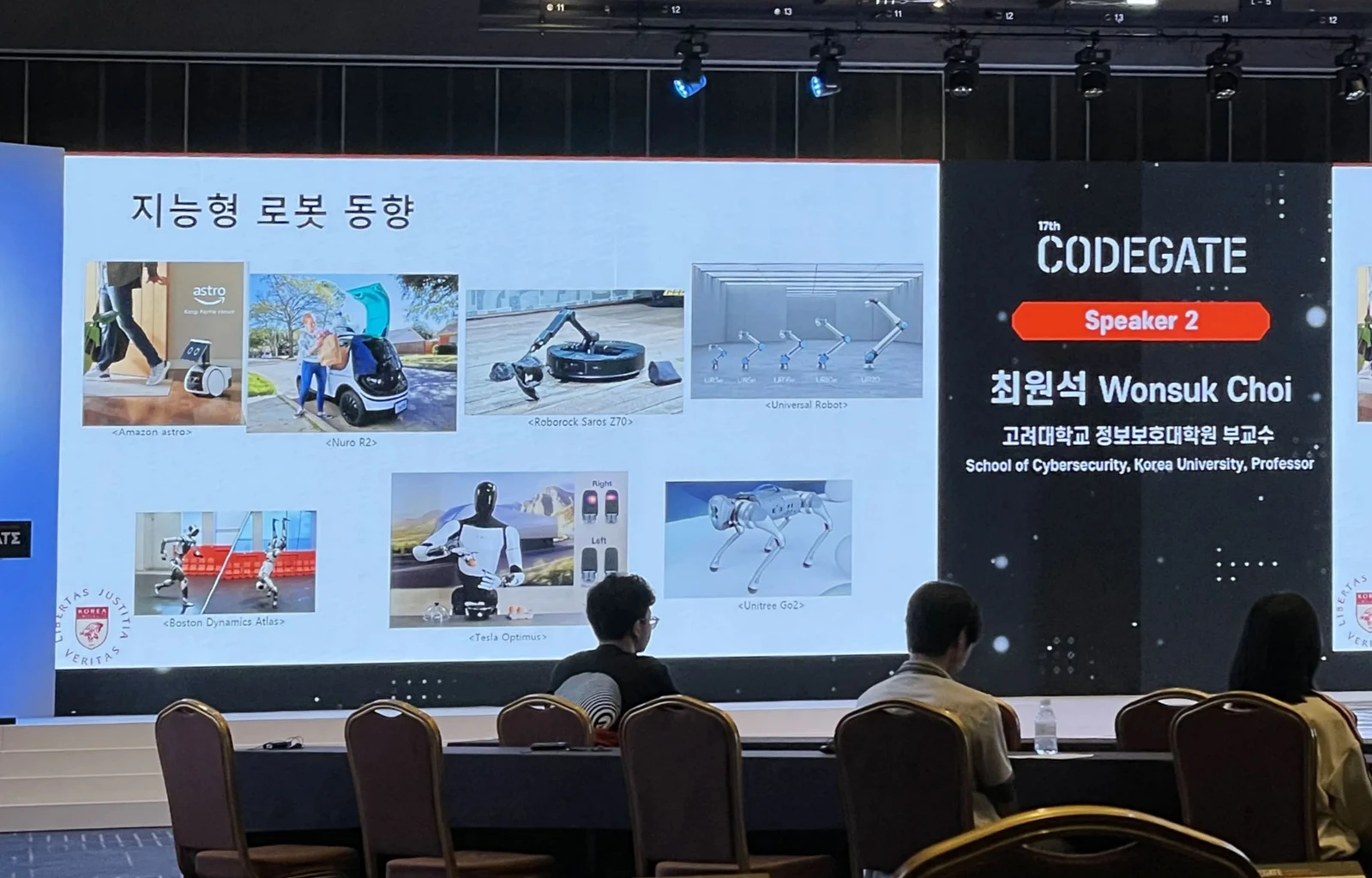
Choi introduced real-world robot security threats: misrecognition incidents, unauthorized recording by robot vacuums, etc.
He outlined security issues across five core functions: detection & recognition, data protection, localization, autonomous driving, and communications/networking.
Detection & recognition systems can be fooled by stickers on signs or dirt/noise on roads, leading to dangerous malfunctions.
Many robots use ROS/ROS2, exposing them to topic snooping or config tampering.
Indoor GPS is inaccurate; UWB-based localization is crucial, but packet replay attacks against UWB have already been documented.
The talk reinforced the urgent need for standardized validation frameworks and pre-release security testing as IoT and robotics spread into daily life.
“Abstractions for Program Analysis”
Speakers: Kyle Martin & Xusheng Li, Vector 35 (Binary Ninja)
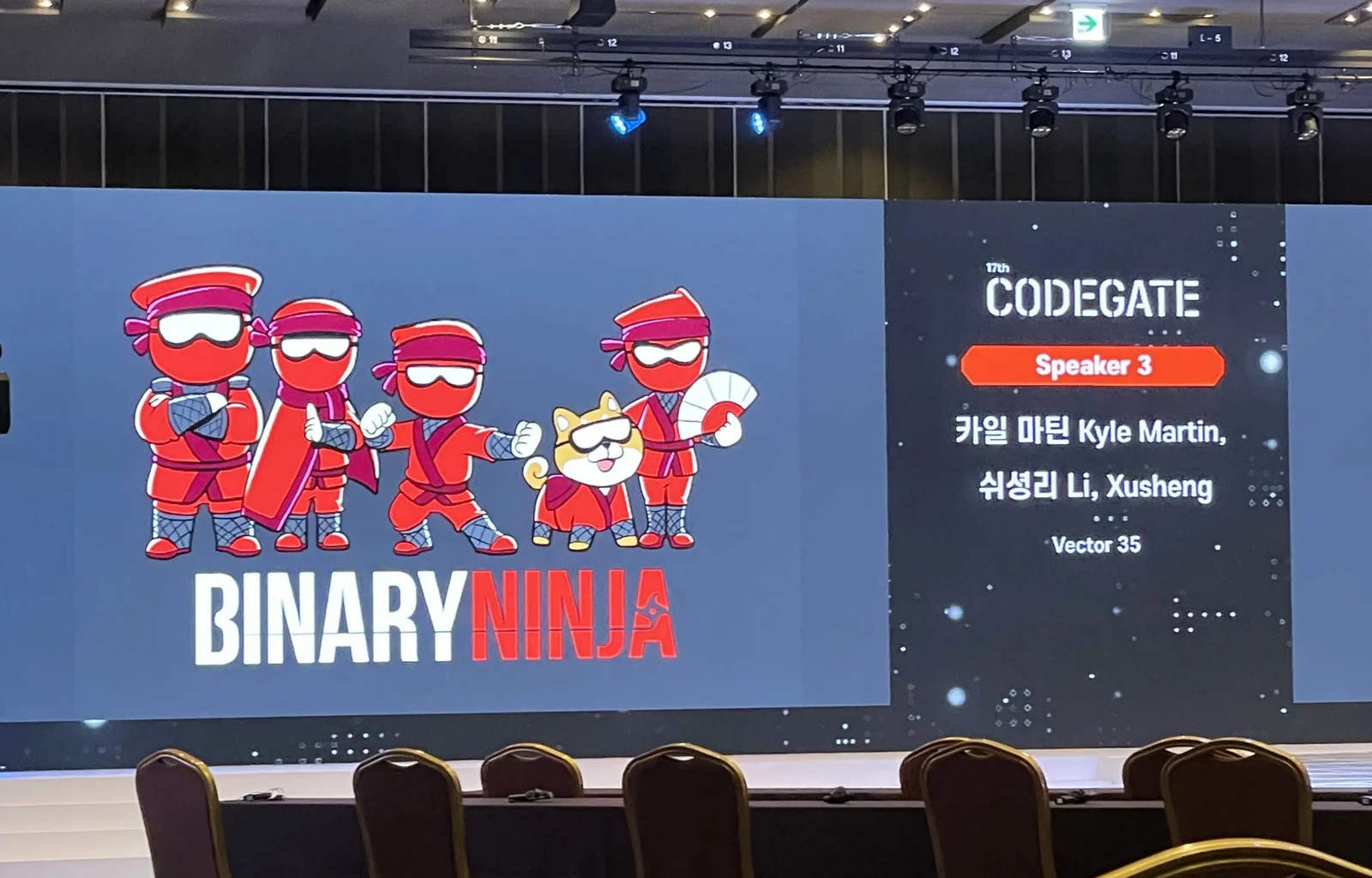
This session explained IR (Intermediate Representation) concepts in program analysis and compiler optimization.
Techniques like SSA, SSI, ANF, and CNF were covered, showing how structured code improves variable tracking,
removes redundancies, and enhances data-flow analysis.
Key takeaway: Choose the right IR for the task, and transform between IRs when needed to maximize both precision and efficiency.
“Evolution of Hardware Security Through Process Scaling”
Speaker: Prof. Seunghoon Han, Soongsil University (Black Hat Asia Review Board)
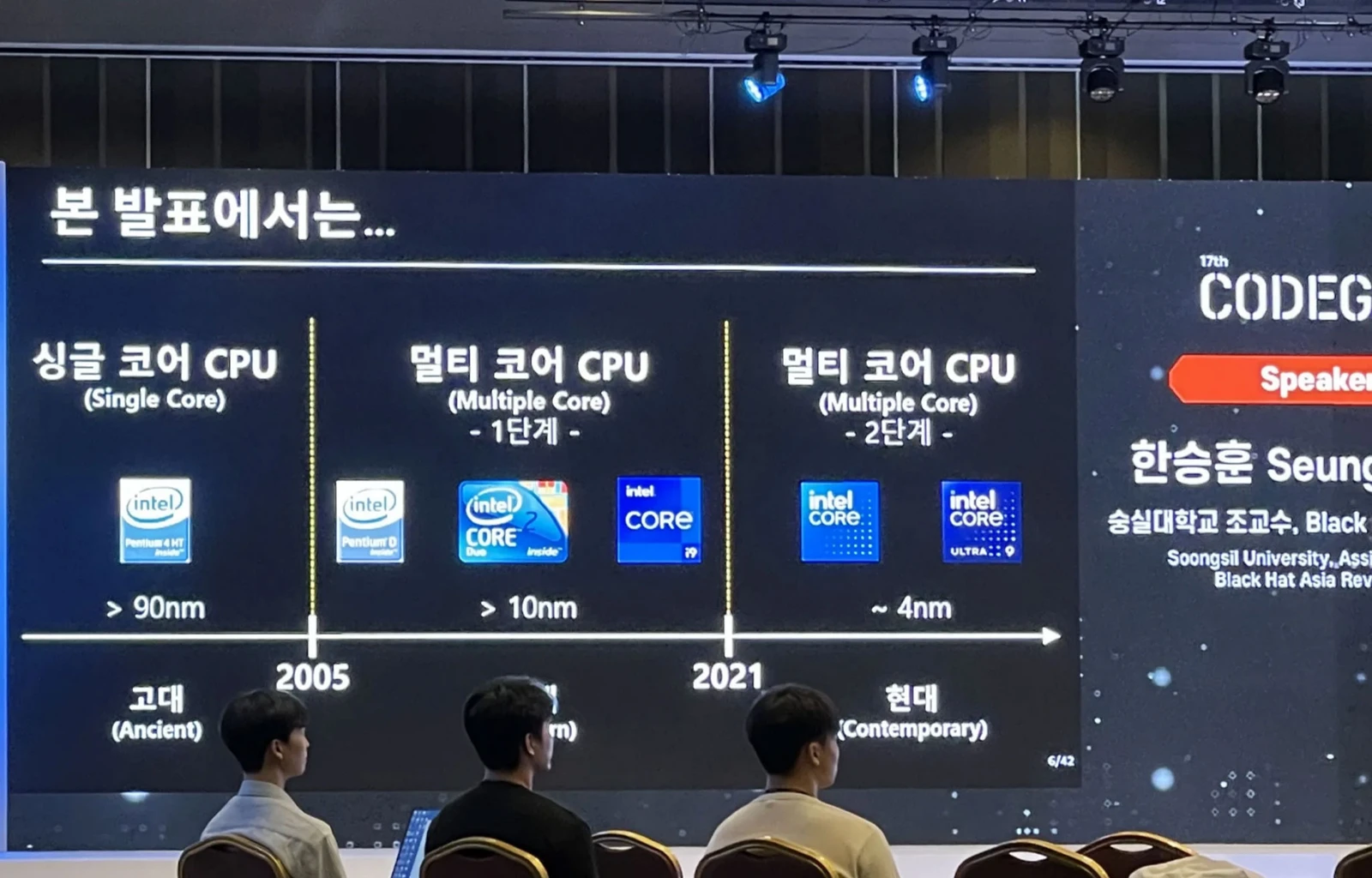
Han divided CPU history into three eras:
Pre-2005 (Ancient): Few built-in protections; even basic buffer overflows could seize control.
2005–2021 (Modern): Multi-core, process shrinking, 64-bit transition; hardware protections like
NX bit,SMEP/SMAPintroduced.2021–Present (Contemporary): With virtualization/cloud dominance, new defenses emerged: memory encryption (TME), control-flow protection (
CFI,CET), and VT-RP for virtualization hardening.
He noted that Intel SGX enclave security was undermined by side-channel attacks, limiting its viability.
Code reuse attacks (CRA) remain difficult to eliminate outright, underscoring the need for layered, hardware-assisted defenses.
The lesson: CPU advancement is as much about security as performance—and the same scrutiny must extend to emerging NPU/AI accelerators.
“Cyber Threat Trends 2025: AI Abuse and North Korean Campaigns”
Speaker: Hojin Chun, Threat Research Team Lead, Enki WhiteHat**
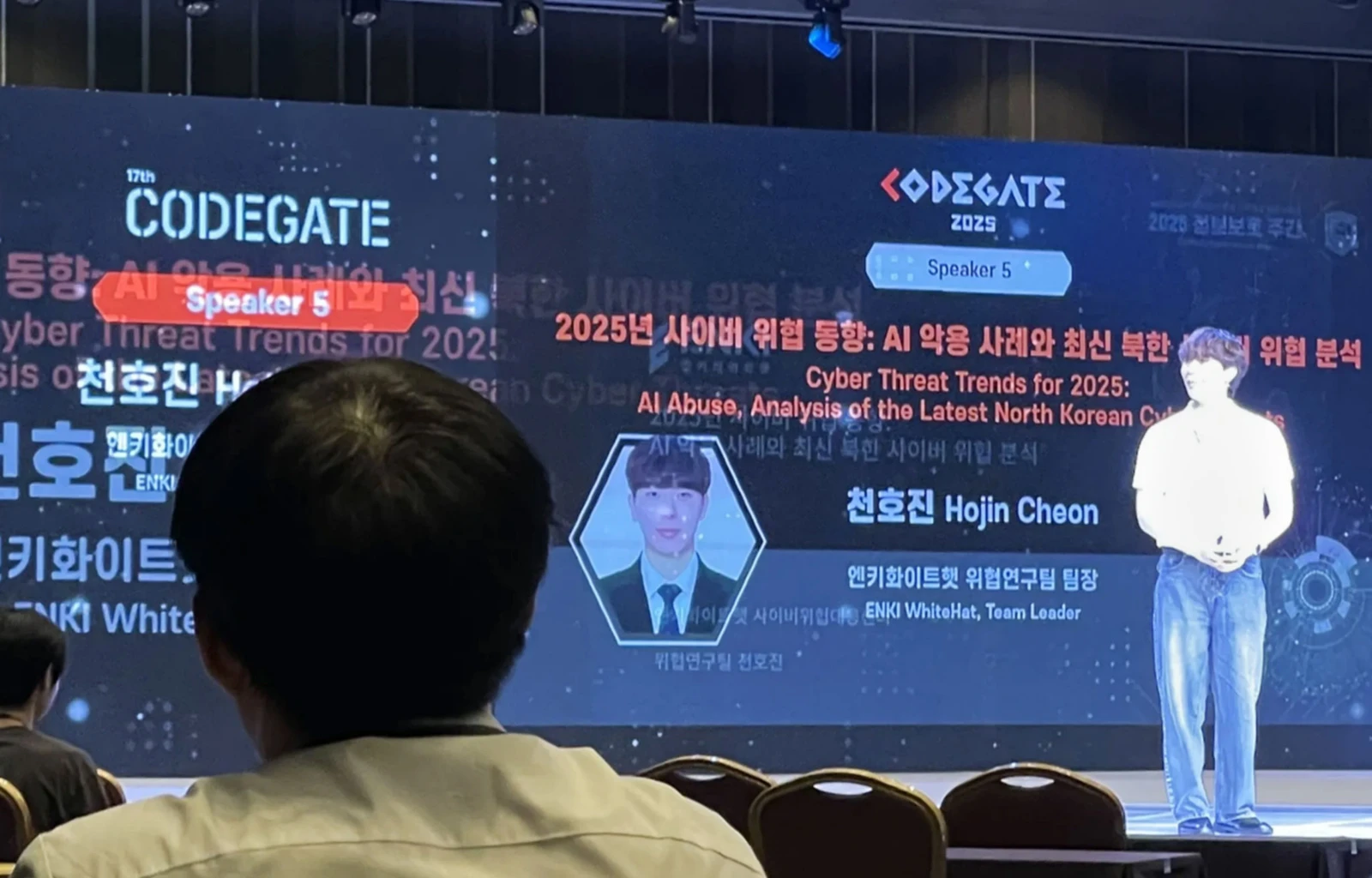
Such tactics are now leveraged by state-backed actors from North Korea and Russia.
North Korea, for instance, distributed malicious LNK files via spear phishing.
Execution pulled malware that ran only in memory, evading file-based detection.
Metadata analysis enabled attacker tracking, while reuse of infrastructure revealed operational habits.
Globally, attackers increasingly exploited legitimate services (GitHub, Google Drive)
and brute-forced SSH credentials with customized lures.
Finally, Chun stressed the need for standardized naming conventions.
While Microsoft and CrowdStrike are aligning terminology, Korean agencies (KISA, NCSC) and vendors must
collaborate on unified vocabulary and intelligence sharing.
“Berlin: The Journey of Six Rookies – 319 Days”
Speaker: Hanseo Kim, Ajou University
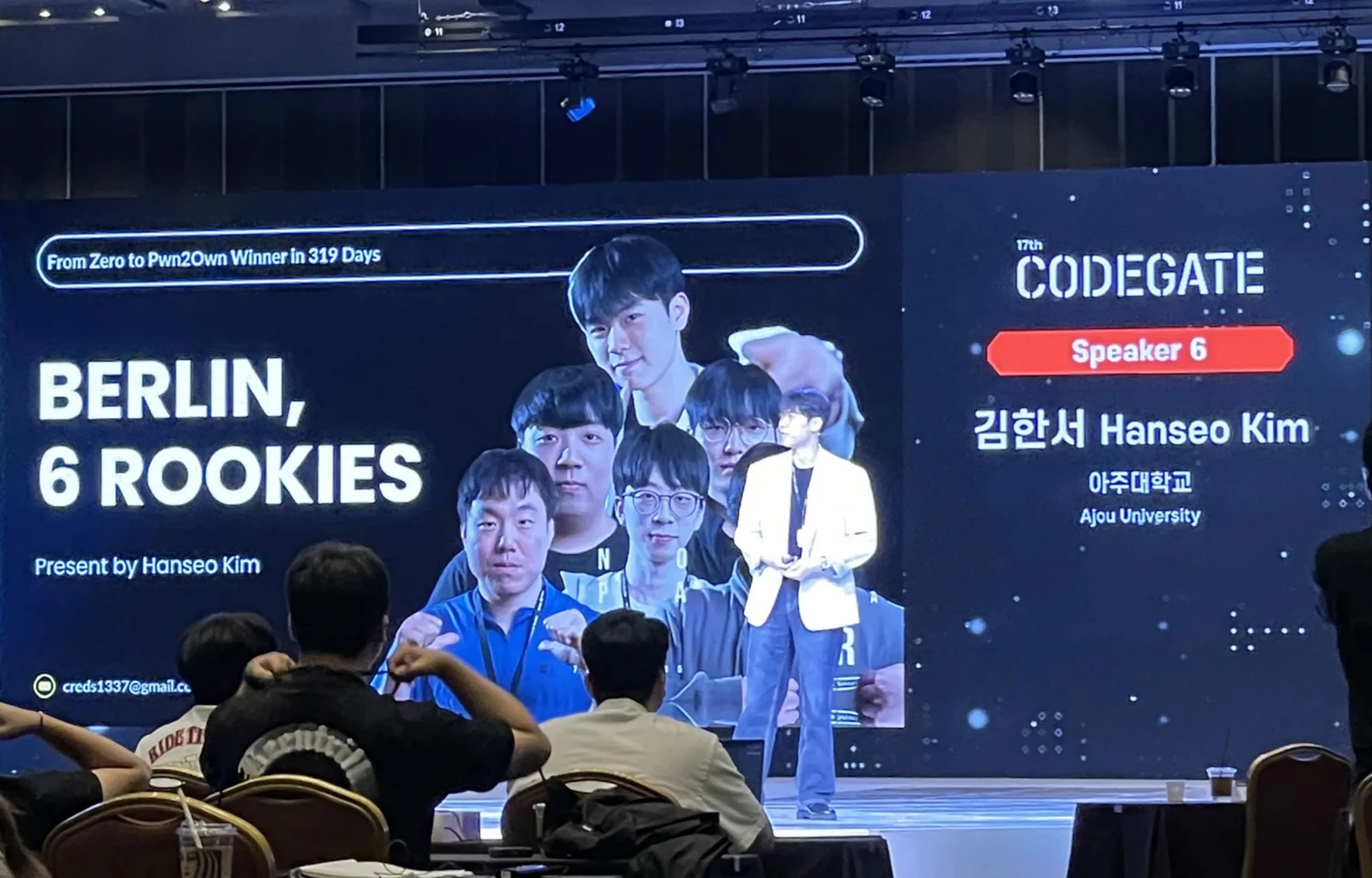
Team Prison Break built a custom fuzzer for VirtualBox, QEMU, and VMware, supplementing it with manual auditing.
They found an OOB Write vulnerability in VirtualBox’s GSO packet handling,
where a guest-controlled value was reused without revalidation, leading to memory overflow.
The exploit chain: ASLR bypass → heap spray → ROP chain to hijack control flow.
Just before the contest, they adapted their exploit to Red Hat Enterprise Linux due to environment changes.
On stage, they achieved a working exploit in 19 seconds, earning a CVE ID, CVSS 8.2 rating, USD 40,000 prize, and Master of Pwn points.
The story illustrated how pivoting from failed fuzzing to manual code analysis can yield breakthroughs,
and why turning setbacks into assets is crucial in R&D.
Closing & Raffle
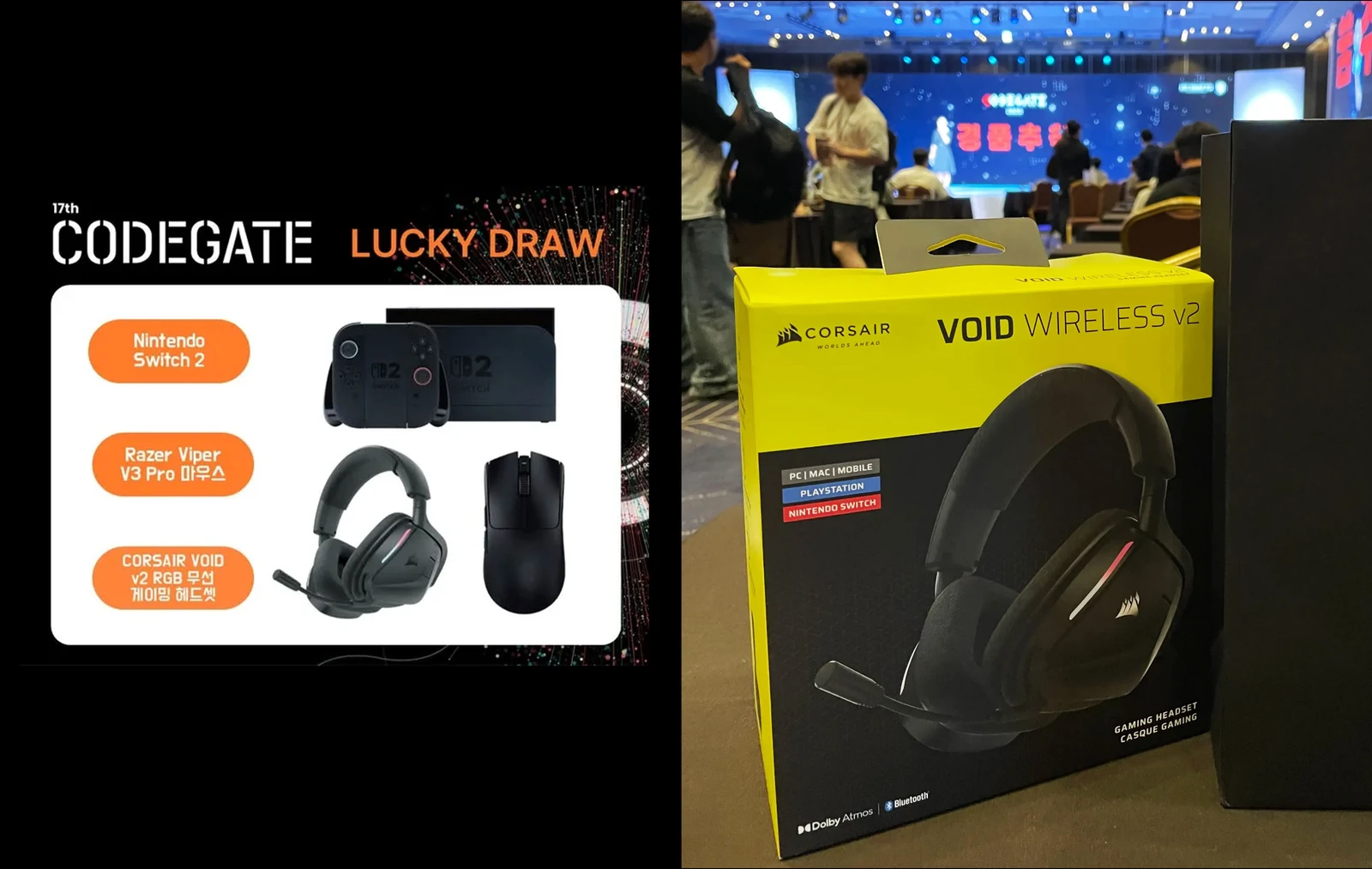
At the end of the day, a raffle drew everyone back into the hall.
As luck would have it, my name was called—capping off an already insightful experience with a prize 🎁.
CODEGATE 2025 wasn’t just about talks and contests; it blended interactive hacking, sector-specific cases, and emerging threat insights.
Particularly, sessions on AI, mobility, and robotics security directly fed into ideas for enhancing ZIEN’s IoT & AI security research.
🔑  Crack the CODEGATE-themed puzzle (4 digits)

Clue 1: “CODEGATE is aging” → the 17th CODEGATE
Clue 2: "Check the date it appears” → July 11 → 1711